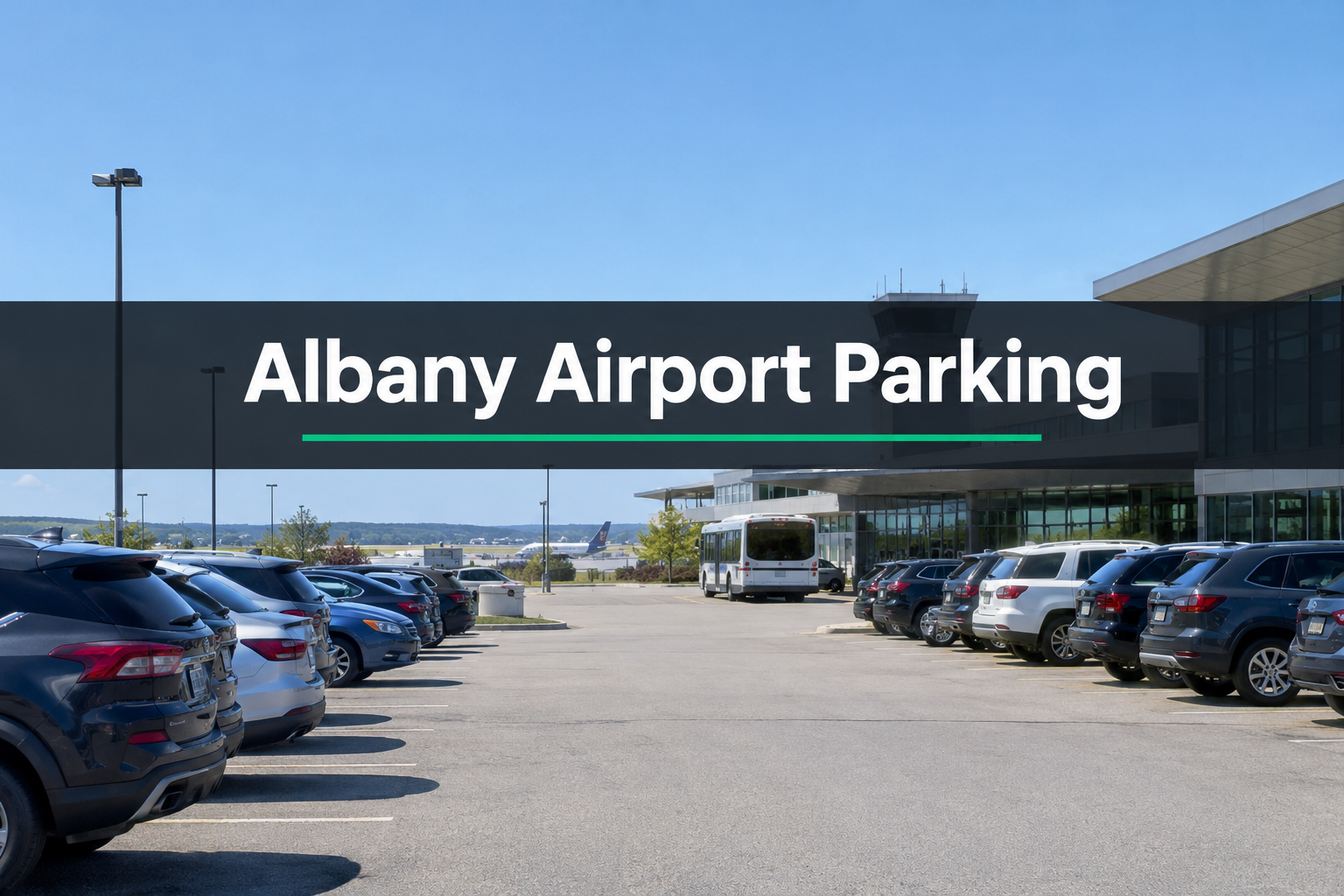
Parking at Albany International Airport can cost as little as $7 a day or as much as $24 a day, depending on which lot you pull into. That is more than a triple difference for the same basic service: a safe place to leave your car while you fly. Understanding Albany airport parking rates before you drive onto airport property is the easiest way to avoid overpaying for a trip that may only last a few days.
This guide breaks down every public parking option at Albany International Airport (ALB), explains how each lot charges for time, and offers practical ways to cut your parking costs without cutting corners on convenience or security. If you also drive around town, our parking directory lists garages by borough.
Key Takeaways
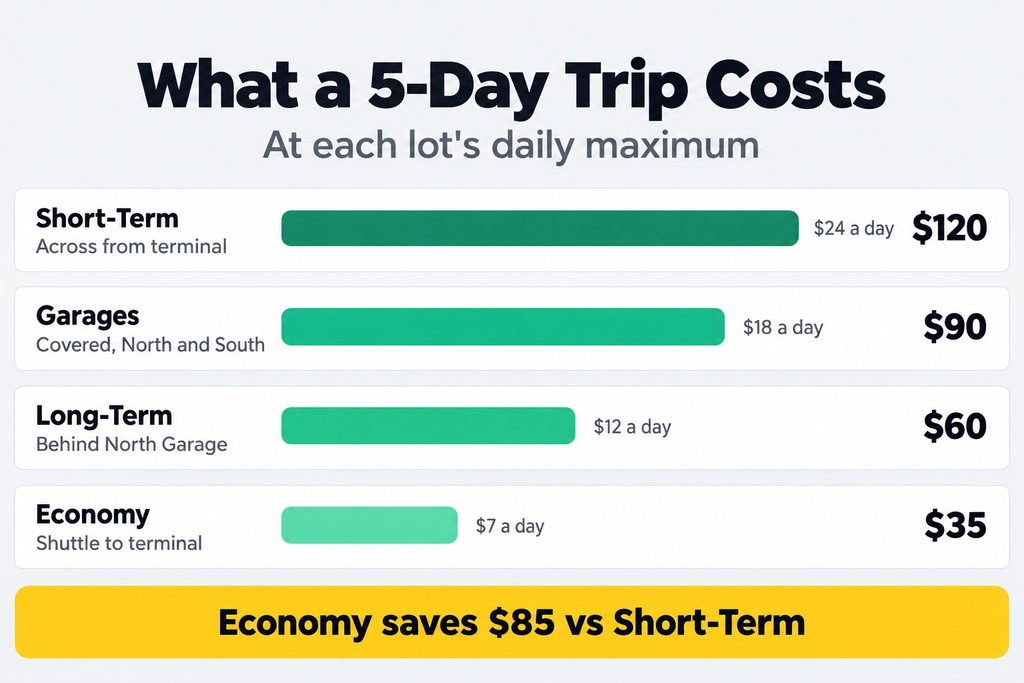
Albany airport parking rates range from a $7 daily maximum in the Economy E-Lot to a $24 daily maximum in Short-Term parking, with Long-Term ($12) and the North/South garages ($18) in between.
The Economy E-Lot offers the lowest cost but requires a shuttle ride to the terminal; Short-Term parking costs more but puts you steps from the doors.
The January 1, 2025 increase was the airport’s first in five years, and Short-Term stayed at $24. These are the rates on the airport’s parking page today.
Always confirm current rates on the official Albany International Airport website before you travel, since third-party sites may show outdated numbers.
Understanding Albany Airport Parking Rates by Lot
Albany International Airport operates four main categories of public parking: Short-Term, the North and South parking garages, Long-Term, and the Economy E-Lot. Each serves a different kind of traveler, from the business flyer dashing in for a same-day meeting to the family leaving the car for a two-week vacation.
Below is a general comparison based on the airport’s official parking page. Always verify current Albany airport parking rates on the airport’s website, since pricing can be adjusted.
Lot Type
Location
Daily Maximum
Best For
Short-Term
Closest to terminal
$24/day
Quick trips, pickups, drop-offs
North & South Garages
Adjacent to terminal
$18/day
Covered parking, moderate stays
Long-Term
Behind North Garage
$12/day
Multi-day trips
Economy E-Lot
Southeast of airport
$7/day
Budget-conscious, longer trips
These figures match the rates listed on the airport’s official parking page. The January 1, 2025 increase was the airport’s first in five years and raised the garage, Long-Term and Economy rates, while Short-Term stayed at $24. Older rates on some travel sites are out of date, so check the airport’s page before you travel.
Short-Term Parking: Convenience at a Premium
Short-Term parking is the garage and surface area closest to the terminal doors. It’s built for travelers who need to grab a bag, meet a flight, or run inside for a short errand.
How it’s charged: Short-Term parking has a daily maximum of $24. That cap keeps costs predictable for anyone who ends up staying longer than planned.
Because Short-Term is the closest option, expect it to be busier at peak travel times. If you are flying out for more than a day or two, this lot will almost always cost more than the alternatives.
North and South Garages: Covered and Central
The North and South garages are the covered option at $18 per day. The airport lists the North Garage (GP1) on floors 2 to 4 and the South Garage (GP2) on floors 1 to 4.
Most airport lots accept EZ-Pass Plus, and all of them accept credit cards, according to the airport.
The garages are a solid middle-ground choice for travelers who want weather protection and a shorter walk than Long-Term or Economy, without paying full Short-Term pricing.
Long-Term Parking: The Balanced Option
Long-Term parking is the main lot behind the North Parking Garage, with a back entrance also available, and it carries a $12 daily rate on the airport’s parking page.
Long-Term parking suits travelers on trips of three days or longer who want a lower rate than the garages without taking the Economy shuttle. For many flyers, this lot offers the best value relative to convenience, since it costs $6 less per day than the garages.
Economy E-Lot: The Lowest Albany Airport Parking Rates
The Economy E-Lot, located southeast of the airport, offers the lowest Albany airport parking rates among all public options, with a $7 daily maximum. It includes shuttle service to and from the terminal.
For trips of several days or longer, the E-Lot delivers the biggest savings thanks to its $7 daily rate.
The tradeoff is time. The shuttle adds a few minutes to your trip compared with walking directly from Short-Term or the garages. For most travelers planning a trip longer than overnight, that tradeoff is well worth the savings.
How to Choose the Right Lot
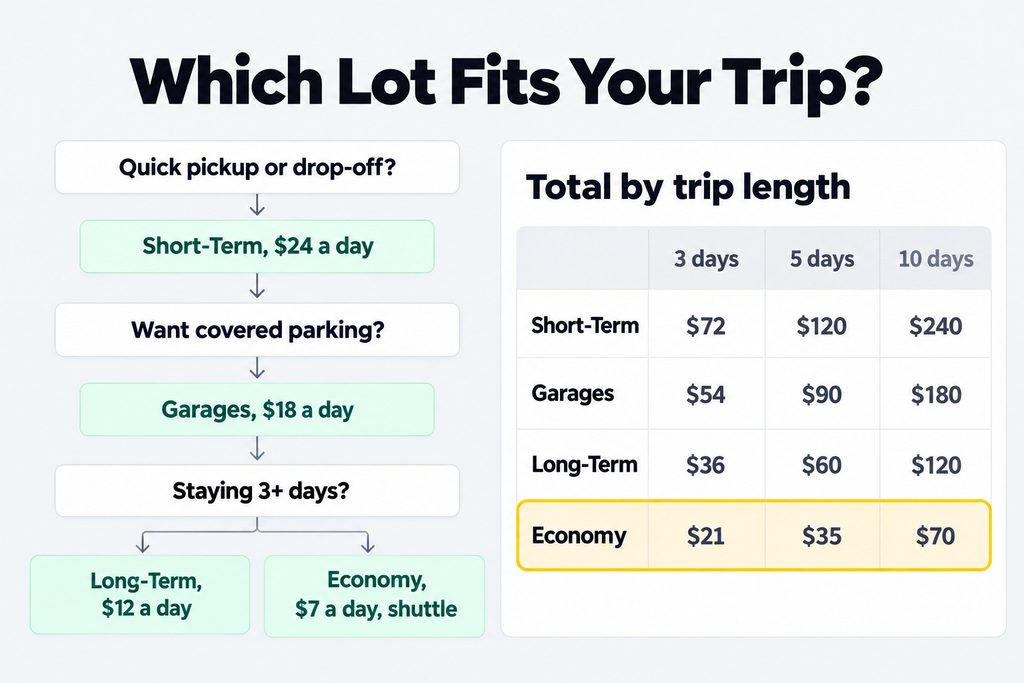
Choosing between Albany airport parking rates options comes down to three questions:
How long will you be gone? Overnight or same-day trips favor Short-Term or the garages. Trips of three or more days favor Long-Term or Economy.
How much walking or shuttle time can you tolerate? Short-Term and the garages offer the shortest walk. Economy requires a shuttle ride.
What is your budget priority? If minimizing cost matters most, the Economy E-Lot wins by a wide margin over a multi-day trip.
Ways to Save on Albany Airport Parking
Choose Economy for longer trips. Over a five-day trip, Economy parking costs roughly $35 compared to $120 in Short-Term, a meaningful difference for budget-conscious travelers.
Check for reservation or loyalty programs. Some airports offer pre-booking discounts or rewards programs; confirm current offers directly on the Albany International Airport website, since promotions can change.
Avoid guesswork with third-party rate listings. Outdated guides may show rates from before the January 2025 price adjustment. Always cross-check with the airport’s official parking page.
Consider off-airport alternatives for extended trips. Independent long-term lots near ALB sometimes offer lower rates than on-airport Economy parking, though shuttle frequency and security policies vary by provider.
Pre-Booking and Planning Ahead
Travelers should plan ahead by checking the airport’s official parking page close to their travel date. Rates, lot availability, and shuttle schedules can shift, which can matter during busy holiday travel weeks. Arriving with extra buffer time before your flight ensures you are not forced into a pricier lot simply because your preferred option was full.
If you plan to park on city streets instead of at the airport, review local rules carefully. The parkruleslive.com Albany parking guide and alternate side parking tool can help you understand posted restrictions, sweeping schedules, and permit requirements before you leave your vehicle curbside.
Albany airport parking rates offer a clear tradeoff between cost and convenience: $24 a day for Short-Term parking steps from the terminal, $18 for covered garage parking, $12 for Long-Term parking, and $7 for Economy parking with a quick shuttle ride. For short trips, paying more for proximity often makes sense. For longer trips, the Economy E-Lot delivers the strongest value without sacrificing safety or reliability.
Before your next flight, check the official Albany International Airport parking page for the most current rates and lot availability, and compare that against your trip length and tolerance for walking or shuttle time. For drivers who need guidance on city street parking in Albany, including alternate side parking schedules, the tools at parkruleslive.com offer additional help in planning a stress-free trip to and from the airport.
This article is for general informational purposes only and does not constitute legal or financial advice. Always confirm current rates and rules directly with Albany International Airport.
A single uncovered spot in a Midtown garage can cost more per month than a studio apartment rent in parts of upstate New York. That is not an exaggeration about real estate math in Manhattan; it is the baseline reality anyone searching for cheap monthly parking NYC has to accept before negotiating anything. The good news is that «cheap» is relative, and with the right borough, building, and booking strategy, drivers can still land a monthly rate well under the citywide averages that make headlines.
This guide breaks down what monthly parking actually costs across boroughs, why Manhattan skews so high, and eleven concrete ways to find a more affordable spot without getting blindsided by hidden fees.
1. Understand the Manhattan Price Ceiling First
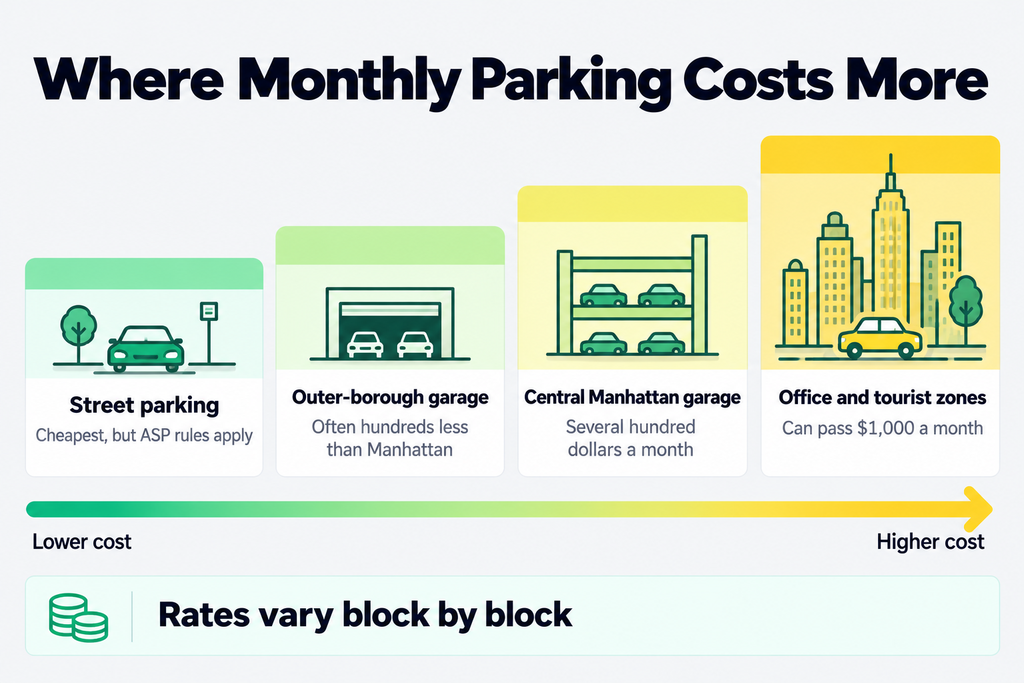
Private garages in central Manhattan often charge several hundred dollars a month, and operators near major office corridors or tourist zones can push well past $1,000. Prices vary block by block, so two nearly identical spots on the same avenue can carry very different rates. Browse the Manhattan garage listings to see how rates compare by area.
The spread exists because Manhattan garages price based on land value, not just square footage. A garage two blocks from a subway hub or a hospital complex has pricing power that an identical structure in a quieter corridor does not. Before assuming Manhattan is universally out of reach, check several blocks in the same neighborhood rather than one.
2. Check Public and City-Affiliated Options First
Some public or city-affiliated parking facilities may offer monthly or permit-style rates below nearby private garages. These options are limited in number and location, so treat them as a possible low-cost starting point rather than a guarantee.
A commuter working near a public facility in Lower Manhattan or near a civic center may find a permit-style monthly rate that beats every private competitor nearby. Availability is the catch. Capacity is limited, so it pays to ask early and check back rather than assuming a spot will be open.
3. Look Seriously at Outer-Borough Garages
Monthly parking in Queens, the Bronx, Brooklyn, and Staten Island is consistently cheaper than Manhattan, often by hundreds of dollars. A garage near a residential corridor in Queens or Brooklyn may charge noticeably below Manhattan’s private-garage rates, simply because land costs and foot traffic are lower. Check the Brooklyn and Queens garage pages in the directory for options.
This works best for residents who do not need to park directly at their Manhattan workplace. Combining an outer-borough monthly spot with a subway or bus commute can cut total transportation cost significantly compared to parking near the office every day. The trade-off is a longer commute leg, which is worth mapping out before committing to a lease-style monthly contract.
4. Choose an Open-Air Lot Over a Structured Garage
Uncovered lots are almost always cheaper than multi-level structured garages with attendants, elevators, and climate control. The convenience premium of a structured garage, especially one with self-park access or valet retrieval, shows up directly in the monthly invoice.
A driver willing to walk an extra block and accept weather exposure can often save noticeably compared to the nearest covered facility. This matters most for vehicles that are not driven daily, since the car sits exposed for longer stretches. It is a reasonable trade for anyone chasing cheap monthly parking NYC options rather than premium convenience.
5. Ask About Off-Peak or Part-Time Plans
Some garages offer reduced monthly rates for vehicles that only need overnight or weekend access, rather than full 24/7 in-and-out privileges. These part-time plans exist because garages can double-book a single spot between a daytime commuter and an overnight resident.
This fits drivers who use a car mainly on weekends or who work from home several days a week. Before signing up, confirm exactly which hours are included, since an off-peak plan that excludes early morning retrieval can create real scheduling conflicts for anyone with an inconsistent routine.
6. Use Parking Apps to Compare Listings Side by Side
Platforms like SpotHero and iPark function less like booking engines and more like price-comparison tools, surfacing garages by neighborhood, access hours, and monthly versus daily rates. Listings on these marketplaces show just how wide the range runs between outer-borough lots and premium Manhattan garages. For a full rundown, see our guide to the best parking apps in NYC.
Checking three or four apps for the same neighborhood often reveals a spread of several hundred dollars for comparable spots. App-based services sometimes advertise headline-low monthly prices, but these frequently come with location, capacity, or time-window restrictions, so confirming the fine print before committing matters more than chasing the lowest number shown on a results page.
7. Watch for App-Exclusive Discounted Inventory
Some garages hold back a portion of their monthly spots exclusively for app partnerships, often at a price below the posted walk-in rate. These discounted blocks are not always advertised on the garage’s own signage or website.
This is one of the few places where real savings show up without sacrificing location. The limitation is volume: app-exclusive inventory tends to sell out fast, especially in high-demand neighborhoods, so checking frequently or setting alerts is more effective than a single search.
8. Negotiate Directly With Garage Managers
Posted monthly rates are often a starting point, not a fixed price, especially at independently operated garages rather than large chain facilities. Managers sometimes have flexibility to offer a lower rate for longer commitments, off-peak hours, or smaller vehicles.
A simple phone call or in-person visit asking whether the posted rate is negotiable costs nothing and occasionally yields a meaningful discount. This works better in person than through an app, since a manager weighing an empty spot against a slightly discounted occupied one has a direct incentive to make a deal.
9. Check Residential Buildings With Spare Spots
Some apartment buildings and condo complexes have parking garages with capacity beyond their own residents, and they rent the overflow to outside drivers, sometimes at a rate below nearby commercial garages. These arrangements are not always listed on major parking apps, so finding them often requires asking directly or checking community boards.
This option suits drivers who live or work near a residential building with underused parking. It is worth confirming the lease terms carefully, since residential garage arrangements can include different rules on guest access, hours, or notice periods than a standard commercial monthly contract.
10. Factor In Taxes, Fees, and Minimum Terms Before Comparing Prices
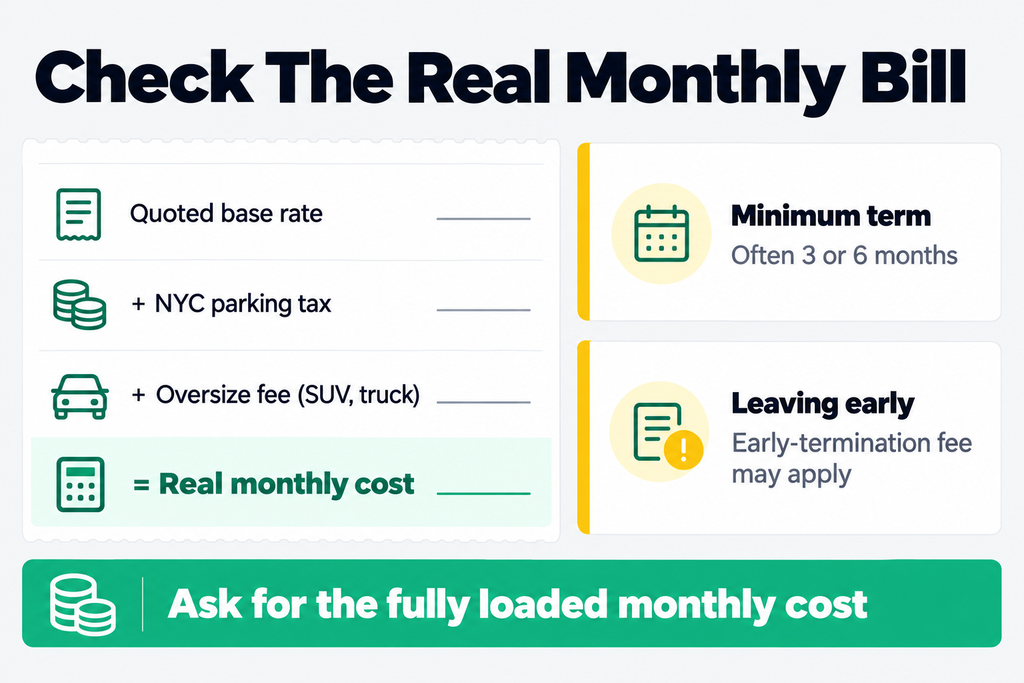
A quoted monthly rate rarely reflects the final bill. New York City parking carries a local tax on top of the base rate, and many garages add oversize vehicle surcharges for SUVs, trucks, or anything exceeding standard length and height limits. Some facilities also require a minimum term, such as three or six months, with an early-termination fee for breaking the agreement sooner.
Two garages quoting the same base monthly price can end up hundreds of dollars apart once taxes and oversize fees are applied. Always ask for the fully loaded monthly cost, not just the advertised headline number, before comparing one garage against another.
11. Treat Street Parking as a Conditional Alternative, Not a Free Pass
For drivers willing to manage the logistics, legal street parking remains the cheapest option by far, but it comes with real constraints tied to alternate side parking (ASP) rules. Missing a scheduled street-cleaning window can mean a ticket that erases any savings from skipping a monthly garage. Use our free street parking map to find legal spots, and read safe places to park in NYC before leaving a car overnight.
Recent updates to meter and mobile-payment systems have changed some day-to-day parking logistics citywide, which can indirectly affect how people plan around metered versus monthly arrangements. Anyone considering street parking as a primary strategy should check current ASP status before relying on it, since suspension schedules shift around holidays and seasonal cleaning calendars. The live status page at parkruleslive.com/is-asp-in-effect/new-york-alternate-side-parking/ is a practical way to confirm whether rules are in effect on a given day before leaving a car on the street overnight. Check the alternate side parking status before you leave your car.
Conclusion
Cheap monthly parking NYC almost always involves a trade-off: location, covered versus open-air, full access versus off-peak hours, or convenience versus a longer commute. Drivers aiming for a lower monthly rate should start with public facilities and outer-borough garages, then layer in app-exclusive deals and direct negotiation before settling for a standard Manhattan posted rate. For ongoing comparisons by neighborhood and facility type, the parking directory is a useful next stop.
This article is for general informational purposes and is not legal or financial advice. Confirm current rates and terms directly with garage operators or official city sources before signing any agreement.
A single garage holds 428 parking spaces for a station that serves both Metro-North commuters and Amtrak travelers, and permits in the area can cost anywhere from roughly $400 to well over $1,200 a year. If that range sounds wide, it’s because parking at Yonkers train station depends heavily on which permit type, residency status, and payment method you use. For anyone driving to catch a train along the Hudson Line or an Amtrak departure, understanding the local system before you arrive can save real money and prevent a ticket.
This guide breaks down the lots, garages, permit options, daily rates, and street parking rules that apply near the station, along with where to verify current pricing directly with the city and transit agencies.
Key Takeaways
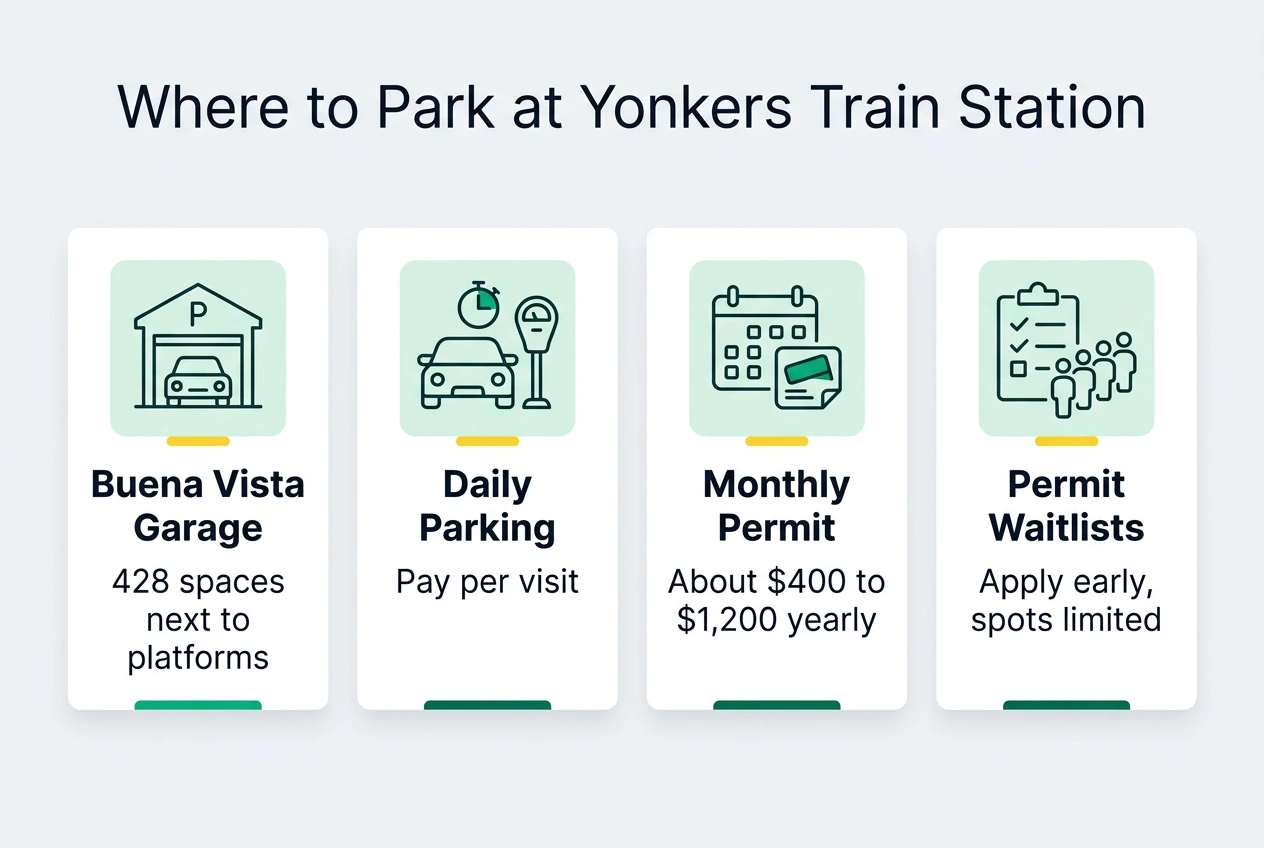
The main facility for parking at Yonkers train station is the Buena Vista Parking Garage at 20 Buena Vista Ave, offering 428 total spaces with fee-based, permit-controlled access.
Both same-day and overnight parking are available at the station, making it usable for daily Metro-North commuters and overnight Amtrak travelers.
Annual commuter permits in the Yonkers area typically range from about $400 to $1,200+, and waitlists may apply, contact the Yonkers Parking Authority to confirm current availability and pricing.
Street parking near the station is governed by Yonkers’ citywide rules, including railroad-crossing setbacks, time limits for taxis and liveries, and alternate side parking enforcement.
Always check real-time alternate side parking status on parkruleslive.com before leaving a vehicle on the street near the station.
Where to Park at Yonkers Train Station
The Yonkers train station sits on the Metro-North Hudson Line and also hosts Amtrak service, which means parking demand comes from two very different rider groups: daily commuters needing predictable, affordable monthly access, and intercity travelers who may need to leave a car for several days. If you plan to compare options beyond the station, our New York parking directory lists garages and lots by area.
Buena Vista Parking Garage
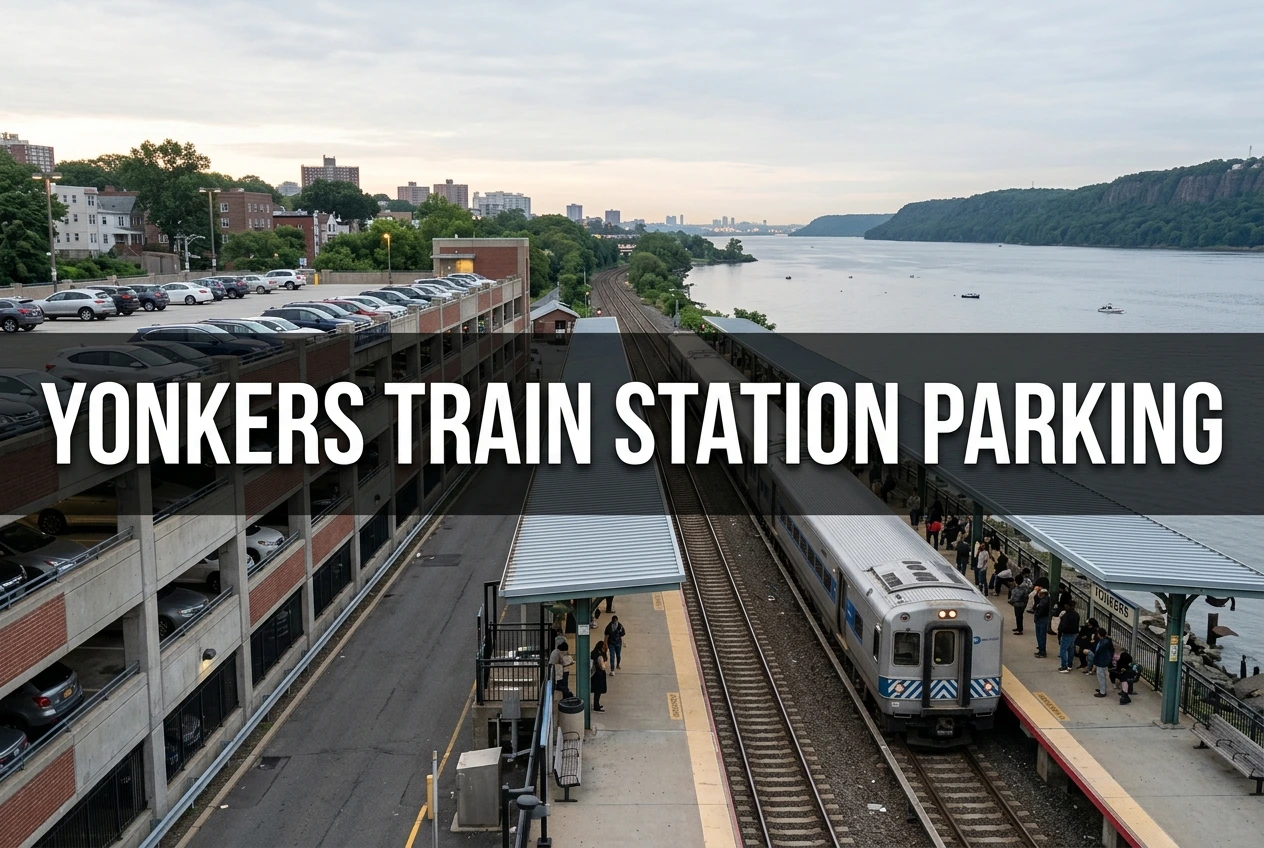
The primary option for parking at Yonkers train station is the Buena Vista Parking Garage, located at 20 Buena Vista Ave, directly adjacent to the station platforms. This structure is the closest and most convenient facility for both Metro-North riders and Amtrak passengers. According to the 511NY park-and-ride database, the garage provides 428 total parking spaces, requires payment of a fee, and operates under a permit-controlled system rather than purely open daily access.
This permit-controlled structure means that while some spaces may be available for daily use, a meaningful portion of the garage’s capacity is reserved for permit holders, particularly during peak commuting hours. Travelers hoping to park without a permit should not assume guaranteed availability, especially on weekday mornings.
Daily vs. Monthly and Permit Parking
Parking at the Yonkers train station generally falls into two categories:
Daily/transient parking, pay-as-you-go access typically used by occasional riders, Amtrak travelers, or those without a monthly permit.
Monthly or annual permits, reserved parking for regular commuters, usually offering a lower per-day cost over time but requiring upfront commitment and, in some cases, a waitlist.
Local cost analysis from mid-2026 indicates that commuter rail station permits in the Yonkers area typically run from approximately $400 to $1,200 or more annually, with the exact figure depending on the station, permit category, and whether the applicant is a Yonkers resident. Because pricing varies by permit type and demand, drivers should not rely on secondhand estimates, the Yonkers Parking Authority (YPA) is the authoritative source for current permit costs and application procedures.
«Permit availability and cost for Yonkers station parking must be checked directly rather than assumed,» as local transportation reporting has emphasized, a caution that remains just as relevant heading into 2026.
How to Pay for Parking at Yonkers Train Station
The city has moved away from traditional coin-operated meters in favor of electronic kiosks and mobile payment apps for most on-street and municipal lot spaces near major transit hubs, including the area around the Yonkers train station. Expect to pay via:
Electronic parking kiosks located in municipal lots and garages
Mobile parking payment apps supported by the city or garage operator
Potential permit-based access cards or hangtags for monthly users
Because official sources do not publish a single, publicly posted daily rate chart for the Buena Vista Garage, travelers should verify current pricing at the kiosk or app at the time of parking. Informal rider reports have described hourly rates in the range of a few dollars for the first hour, rising over a few hours, but these figures are anecdotal and may not reflect current 2026 pricing. Always treat posted kiosk or app rates as the authoritative number for that day.
Permits, Waitlists, and Resident Rules
Permit systems for parking at Yonkers train station are managed through the Yonkers Parking Authority, which handles both municipal garage permits and information about rates. Because the city does not publish a complete permit schedule online, applicants are directed to contact the YPA directly for:
Current permit pricing by category (resident vs. non-resident)
Waitlist status, since some permits have limited slots and existing waitlists
Application requirements, including proof of residency where applicable
Residential parking permits for neighborhoods surrounding the station are handled separately through the Yonkers City Clerk’s office. These permits require proof of residency and a valid vehicle registration, and they generally waive certain meter or time-limit requirements within designated residential zones, but they do not override state and local safety rules such as fire hydrant clearances or crosswalk setbacks.
Overnight and Long-Term Parking for Amtrak Travelers
One advantage of the Yonkers station setup is that both same-day and overnight parking options exist, according to Amtrak’s own station profile. This matters for Amtrak passengers who may be traveling for multiple days and need to leave a vehicle parked longer than a typical commuter shift. Fees may apply to both same-day and overnight parking, so long-term parkers should confirm current overnight rates and any maximum-stay restrictions before leaving a car unattended for an extended trip.
Travelers planning multi-day trips should also factor in that permit-controlled garages may prioritize monthly permit holders during certain hours, potentially affecting space availability for long-term transient parkers.
Nearby Alternatives and Other Hudson Line Stations
Not every Hudson Line station near Yonkers operates the same way. Greystone and Glenwood, two nearby Metro-North stations also managed by the Yonkers Parking Authority, use largely permit-only lots with only a small number of metered spaces and no overnight parking allowed. Drivers coming from the city can also browse Bronx parking garages and lots near the Hudson Line, or read our tips on safe places to park in NYC.
This is an important distinction: commuters should not assume that rules at Greystone or Glenwood, particularly the no-overnight policy, automatically apply to the main Yonkers station. Each station operates under its own specific parking policy, so cross-referencing rules between stations can lead to incorrect assumptions and unnecessary fines.
Station
Permit Type
Overnight Parking
Managed By
Yonkers (Metro-North/Amtrak)
Fee-based, permit-controlled
Allowed (fees may apply)
Yonkers Parking Authority
Greystone
Largely permit-only
Not allowed
Yonkers Parking Authority
Glenwood
Largely permit-only
Not allowed
Yonkers Parking Authority
Street Parking Rules Near Yonkers Train Station
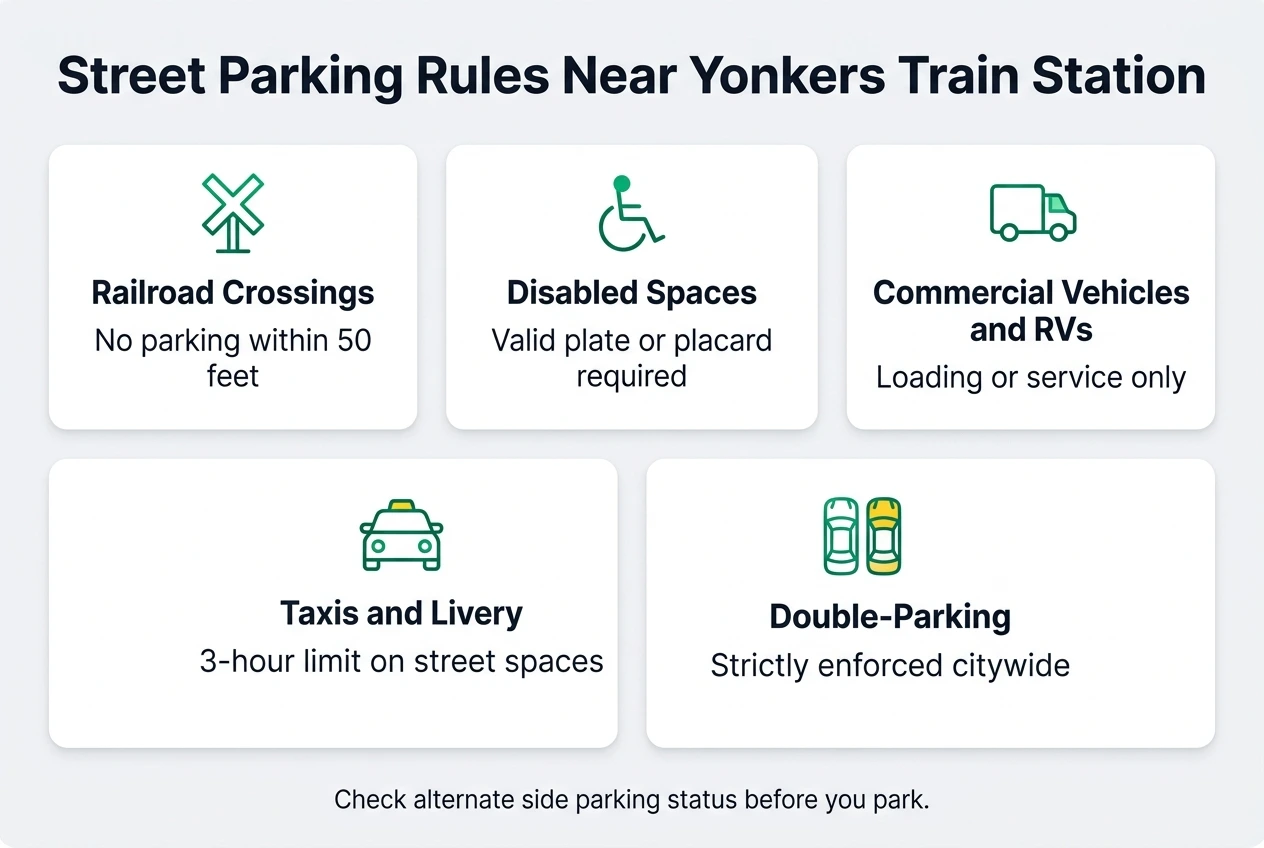
Drivers who choose to park on the street near the station instead of in the garage face a stricter and more variable set of rules. Yonkers enforces several specific regulations that affect curbside parking around transit hubs: Before leaving your car on the street, check today’s Yonkers alternate side parking status so street cleaning rules don’t catch you off guard.
Railroad crossing setback: Vehicles may not park within 50 feet of a railroad crossing, a rule directly relevant to streets near the station tracks.
Disabled parking spaces: Require a valid disability plate or placard; unauthorized use risks a citation.
Commercial vehicles, trailers, buses, and RVs: Street parking is limited to brief loading or service activity, not long-term storage near the station.
Taxis, private rentals, and livery vehicles: May not occupy a legal street space for more than three hours, which affects how ride-service vehicles stage near the station for pickups and drop-offs.
Double-parking: Strictly enforced citywide, including near downtown and civic areas close to the station.
Alternate Side Parking and Ticket Risks
Alternate side parking rules in Yonkers can change based on holidays, weather events, or city street-cleaning schedules, and these suspensions are not always obvious from static signage alone. A vehicle that was legally parked the day before can be in violation the next morning if the schedule shifts.
Because of this, drivers who choose street parking near the Yonkers train station, rather than the Buena Vista Garage or another municipal lot, face real risk of a ticket if they are not checking current status.
Before parking on the street near Yonkers train station, check today’s real-time alternate side parking status on parkruleslive.com. This simple step can prevent an avoidable fine and save a return trip to move your car.
Zoning and Future Parking Supply
Yonkers’ zoning ordinance requires off-street parking for most new construction, including at least one parking space per apartment or live-work unit within a quarter mile of an active passenger train station. While intended to support transit-oriented development, this rule also signals that on-street parking supply near the station is unlikely to expand and may tighten further as new housing is built.
Combined with permit-only policies at neighboring stations and limited public rate transparency, this suggests that both permit fees and daily rates for parking at Yonkers train station could trend upward over time as ridership and housing demand grow. This is a reasonable expectation based on current patterns, not a confirmed or announced 2026 policy change.
Conclusion
Parking at Yonkers train station is manageable, but it requires some homework. The Buena Vista Parking Garage offers the most direct, fee-based, permit-controlled option with room for both daily Metro-North commuters and overnight Amtrak travelers. Monthly and annual permits offer savings for regular riders but come with costs that vary significantly and sometimes a waitlist, so contacting the Yonkers Parking Authority directly for current rates is essential.
Street parking is an option but comes with stricter rules, including railroad crossing setbacks, commercial vehicle restrictions, and alternate side parking enforcement that can change daily. Before choosing the curb over the garage, verify today’s alternate side parking status on parkruleslive.com to avoid an unnecessary ticket. For the most reliable experience, confirm current permit pricing with the Yonkers Parking Authority and check posted kiosk or app rates before you park. If you do get a ticket, our guide on how to pay or dispute a Yonkers parking ticket walks you through the process, and our breakdown of impound fees per day in New York explains the cost if a car gets towed. You can also follow alternate side parking status across New York on Park Rules Live.
parking at yonkers train station, Yonkers Metro-North parking, Buena Vista Parking Garage, Amtrak Yonkers station, Yonkers Parking Authority, alternate side parking Yonkers, commuter rail permits, Hudson Line parking, overnight parking Amtrak, street parking rules Yonkers, residential parking permits, parking fines avoidance
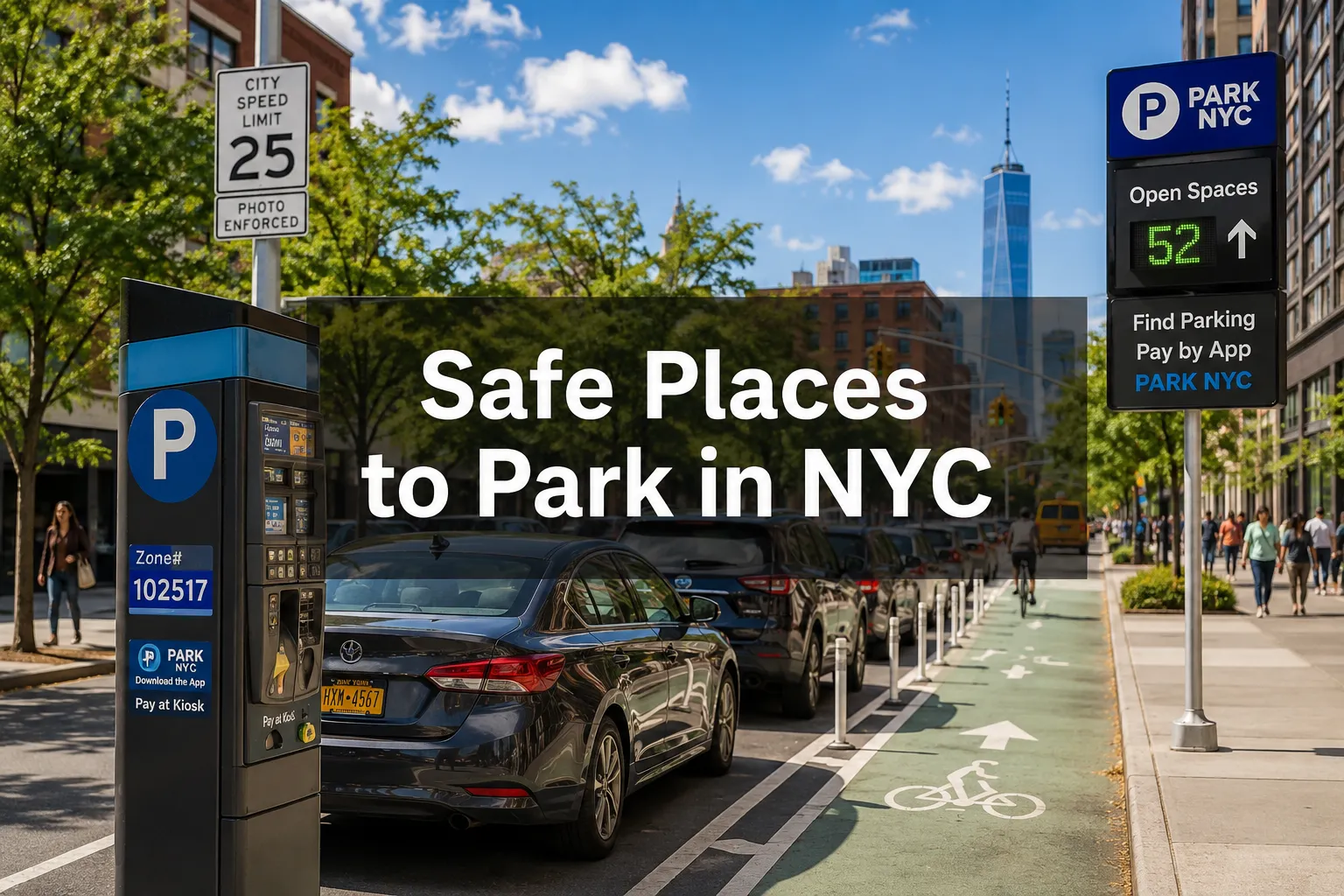
New York City towed more vehicles for illegal parking in 2026 than any year on record, with drivers losing an average of $400 per incident between fines, towing fees, and impound storage. Every single block in NYC is a designated tow-away zone, meaning one misread sign or overlooked rule can cost you hundreds and hours of recovery time[8]. Finding truly safe places to park in NYC isn’t about luck, it’s about understanding official regulations, tracking real-time Alternate Side Parking status, and choosing locations that minimize citation risk.
Key Takeaways
All of NYC is a tow-away zone; safe parking requires strict adherence to posted signs, ASP schedules, and state law
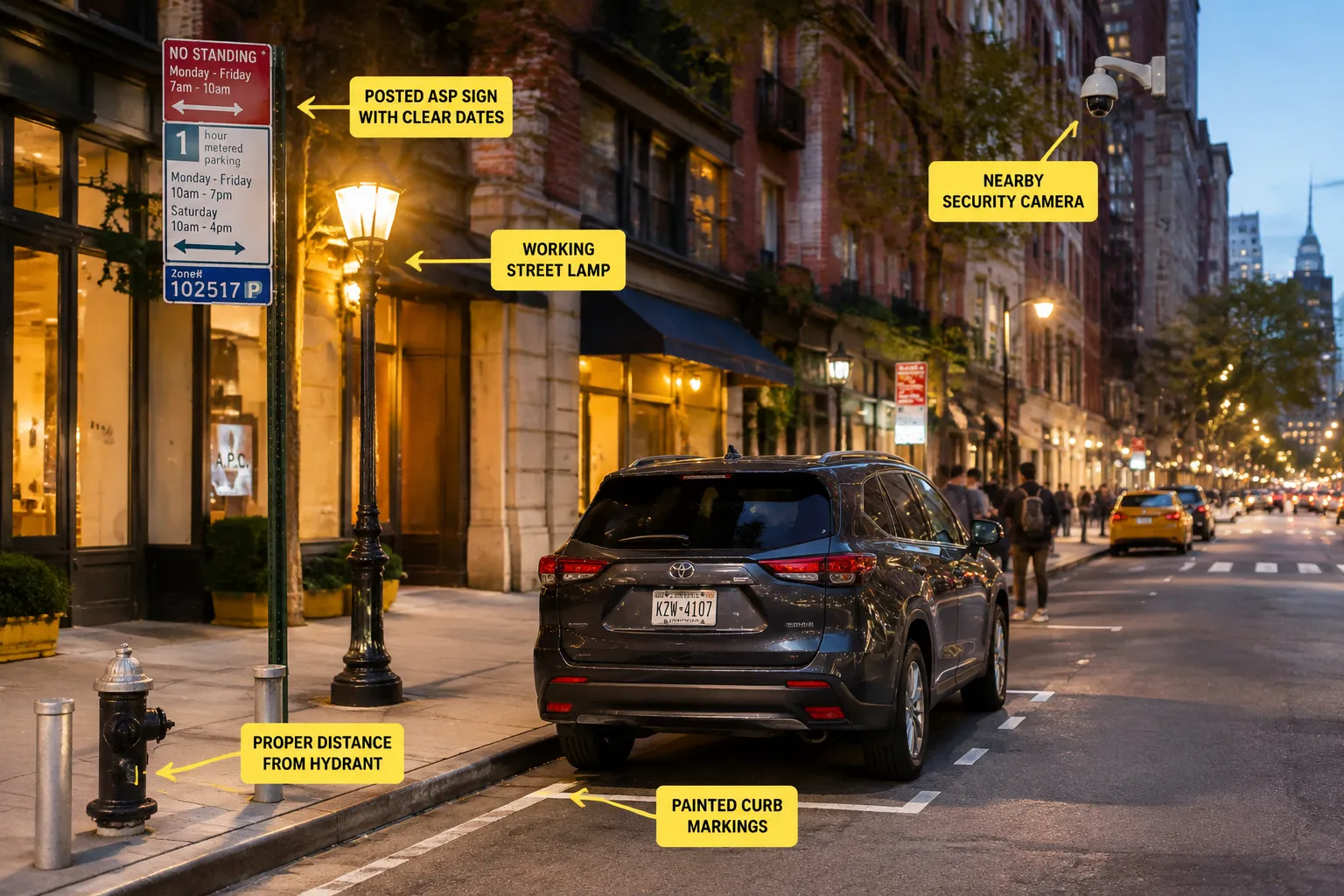
The 15-foot fire hydrant rule remains the most violated safety regulation, with painted curbs offering no legal protection
Real-time ASP suspension tracking is essential; street cleaning violations account for thousands of tickets monthly
Off-street garages and legal metered spaces offer the lowest-risk parking, while cone-reserved spots and bike lanes carry immediate citation exposure
Enforcement is shifting from NYPD to DOT in 2026, with increased focus on safety-critical violations like blocking bike lanes and crosswalks
Understanding What Makes Parking «Safe» in NYC
Safe places to park in NYC are defined by legality first, security second. The NYC Department of Transportation emphasizes that all five boroughs operate as tow-away zones, meaning any vehicle parked illegally, with expired registration, or missing inspection stickers can be towed immediately without warning[8].
«Safe» parking means:
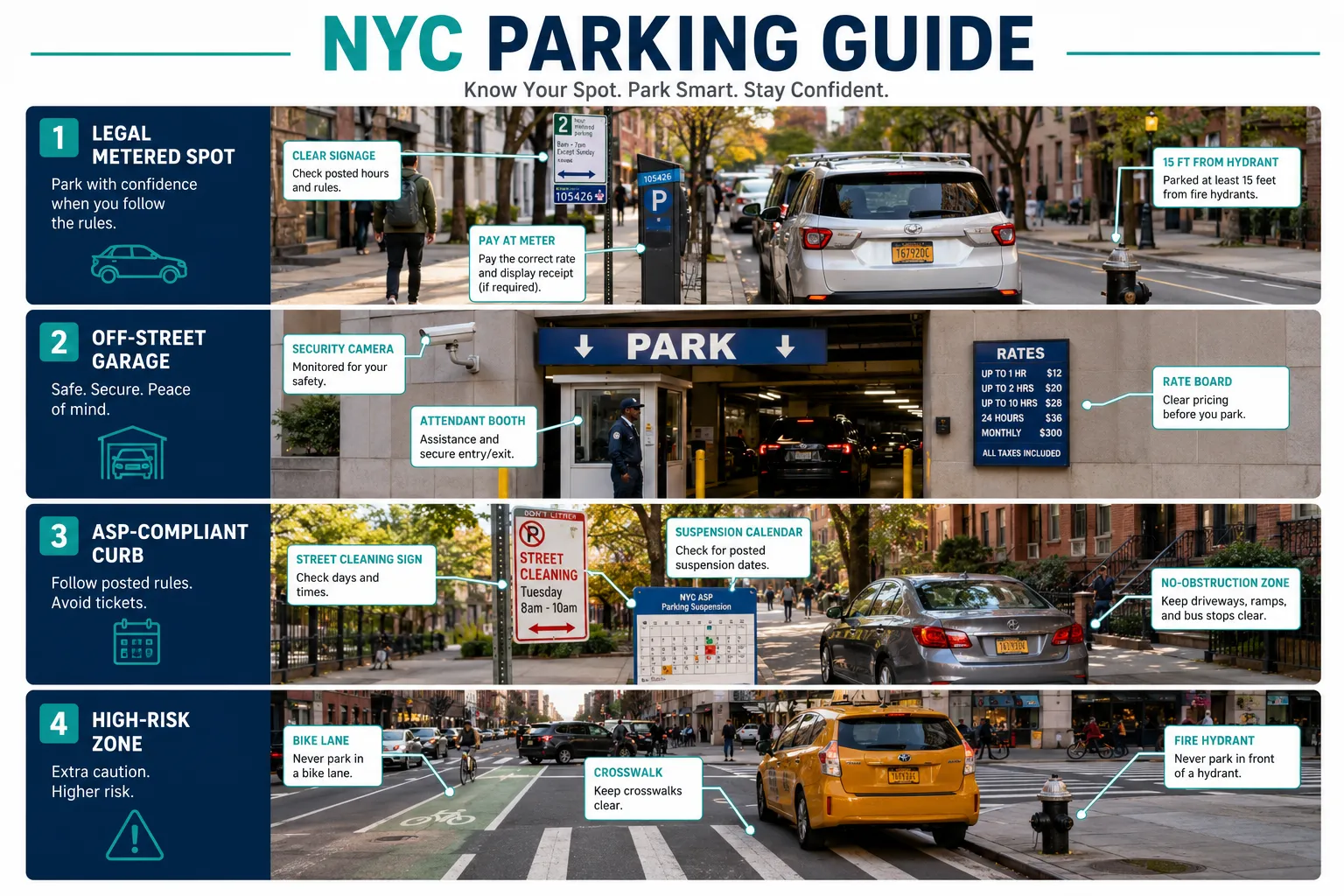
Full compliance with posted signage: Every sign on the block applies to your spot
Adherence to Alternate Side Parking rules: Active ASP windows trigger $65 fines and potential towing
Respect for safety zones: 15 feet from hydrants, no blocking crosswalks, bus stops, or bike lanes
Valid registration and inspection: Vehicles with temporary plates or expired documents attract scrutiny[4]
The 2026 parking regulations updated in August make clear that double parking of passenger vehicles is illegal at all times, including during street cleaning operations[8]. Painted curbs near fire hydrants are not reliable legal indicators, drivers must estimate or measure the 15-foot distance themselves, as violations carry $115 fines[5][8].
Top Safe Places to Park in NYC: Borough-by-Borough Breakdown
Manhattan: Metered Spots and Managed Garages
Manhattan has fewer than 190,000 free street parking spots, creating intense competition and enforcement pressure[11]. The safest parking options prioritize:
Legal Metered Spaces: Use the ParkNYC app to extend sessions and avoid overstay violations. Metered spots with clear signage and digital payment options reduce misunderstanding risk[5][10].
Upper Manhattan Residential Blocks: Areas with straightforward ASP schedules (Monday/Thursday or Tuesday/Friday patterns) and minimal commercial traffic offer safer street parking when ASP is suspended.
Avoid: Blocks with DIY cone «reservations,» which trigger illegal obstruction summonses for both the cone placer and any driver who parks improperly around them[7][10].
Brooklyn: Neighborhood-Specific ASP Compliance
Brooklyn parking requires hyper-local ASP tracking. Safe places to park in NYC’s most populous borough include:
Park Slope During Suspensions: Check real-time ASP status for Park Slope before committing to curbside parking. Suspensions for holidays and snow operations create multi-day safe windows[2][9].
Greenpoint Commercial Meters: Well-marked metered spots near commercial corridors offer clear signage and frequent turnover. Track Greenpoint ASP status to avoid cleaning-day conflicts.
Brooklyn saw the highest volume of tickets tied to illegal cone-placement «parking scams» in January 2026, making blocks with visible spot-saving attempts high-risk zones[7].
Bronx: Off-Street Facilities and Residential Compliance
The Bronx parking landscape offers more off-street options than Manhattan, reducing citation exposure:
Residential Streets with Clear ASP: Outer Bronx neighborhoods with simple two-day ASP schedules and low commercial density offer safer street parking when suspensions are active.
Airport-Adjacent Lots: Jamaica JFK Discount Parking and similar facilities serve travelers needing extended safe storage.
Staten Island: Residential and Commercial Balance
Staten Island parking combines suburban-style availability with NYC enforcement standards. Managed facilities like Huguenot Parking offer secure options, while residential blocks with infrequent ASP schedules provide safer street parking during suspensions.
Alternate Side Parking: The Key to Safe Street Parking
Alternate Side Parking violations account for thousands of monthly tickets because drivers fail to track suspension calendars and active cleaning windows[2][14]. Safe places to park in NYC require real-time ASP monitoring.
How ASP Suspensions Create Safe Parking Windows
The official 2026 ASP calendar lists scheduled suspensions for holidays and religious observances[2]. Additional suspensions occur for:
Snow operations: February 2026 saw multiple emergency ASP suspensions through February 8 and February 10 to facilitate plowing[14][15]
Major holidays: Independence Day 2026 suspended ASP for July 3-4, creating a two-day safe window[2][9]
Emergency declarations: Weather and municipal events trigger unscheduled suspensions
During suspensions, drivers do not need to move vehicles for street cleaning. However, all other rules, hydrant distances, crosswalk clearances, bus lane restrictions, remain fully enforceable[8][9].
Real-Time ASP Status Tools
Check status before parking:
Official DOT suspension announcements: Posted at nyc.gov/dot and via 311 alerts
Neighborhood-specific trackers: Monitor local ASP status for precise compliance
Mobile alerts: Set phone reminders for ASP windows and meter expirations[5][10]
Explore the Parking Education Hub for comprehensive guides on suspension calendars and citation avoidance.
High-Risk Parking Zones to Avoid
Certain locations guarantee citations or towing, regardless of posted signs:
Safety-Critical Violations
Within 15 feet of fire hydrants: $115 fine; painted curbs are not legal indicators[5][8]
Blocking bike lanes: Increasingly enforced as DOT assumes parking oversight[1][13]
Bus stops and bus lanes: $115 fine plus potential towing[5]
Crosswalks and intersections: $115 fine; blocks pedestrian access[8]
Illegal Spot-Saving and Obstruction Zones
January 2026 investigations revealed record ticket volumes tied to illegal cone placement[7]. Blocks with visible DIY «reserved» spots using cones, chairs, or barriers are high-risk because:
Placing objects on the street is illegal obstruction
Parking around improperly placed items can trigger summonses
Enforcement targets both the obstruction placer and any driver benefiting from it[7][10]
Travel Lanes and Double Parking
Double parking of passenger vehicles is illegal at all times, including during ASP operations[8]. Parking in travel lanes often results in immediate towing plus fines[5].
Enforcement Shifts and 2026 Policy Changes
DOT Takeover of Parking Enforcement
Multiple NYC community boards voted in March and April 2026 to shift parking enforcement from NYPD back to DOT, arguing that police have not prioritized street safety[1][13]. If implemented citywide, expect:
Increased focus on safety violations: Blocking bike lanes, bus lanes, and crosswalks will attract more citations
Systematic enforcement: DOT may deploy automated systems and dedicated enforcement teams
Higher fine collection rates: Specialized parking enforcement historically issues more citations than NYPD patrol
Shame Stickers for Repeat Violators
The City Council reauthorized neon adhesive «shame stickers» in July 2026 for chronic bad parkers[12]. These stickers target:
Vehicles repeatedly violating ASP rules
Cars blocking street sweepers
Drivers with multiple unpaid citations
The policy aims to deter repeat violations in high-turnover cleaning zones.
Enhanced Plate Verification
City Council measure Int 0550-2026 requires NYPD to verify license plates and VINs for vehicles with temporary plates or outstanding summonses, publishing quarterly enforcement reports[4]. This scrutiny makes parking with legitimate, properly registered plates in well-marked legal spaces more critical than ever.
Practical Strategies for Finding Safe Places to Park in NYC
Walk the Entire Block
Many tickets result from missing one sign on the block[5][10]. Before committing to a spot:
Read every sign from corner to corner
Note overlapping restrictions (metered + ASP + time limits)
The ParkNYC app allows meter extensions without returning to your vehicle, reducing overstay violations[5][10]. Set phone alarms for:
Meter expirations
ASP window starts
Street cleaning schedules
Subscribe to Official Calendars
Official suspension calendars and 311 alerts provide advance notice of safe parking windows[2][6]. Subscribe to:
DOT ASP suspension announcements
Borough-specific parking newsletters
Neighborhood community board alerts
Choose Off-Street When Possible
Professional garages eliminate citation risk, ASP complexity, and security concerns. Compare rates through the NYC Parking Directory to find cost-effective managed facilities.
Understand Typical Fine Levels
Common violations carry predictable penalties[5]:
Expired meter: $50-$65
ASP violation: $65
Hydrant, bus stop, bike lane, crosswalk: $115
Travel lane parking: Fine plus towing (typically $400+ total)
From a risk perspective, parking near hydrants, bus stops, or in ambiguous travel lanes is financially high-risk, while clearly signed legal meters and garages are comparatively safer choices.
Resources for Tickets, Disputes, and Towing Recovery
Fighting Unfair Parking Citations
If you receive an unfair citation, the Tickets & Disputes resource hub provides:
Step-by-step dispute filing guides
Evidence collection checklists
Common defense strategies for ASP, meter, and signage violations
Towed Vehicle Recovery
If your vehicle is towed, act immediately to minimize storage fees. The Towing & Impounds guide covers:
Locating your towed vehicle through official NYC systems
Explore New York City parking articles for comprehensive coverage of municipal rules, policy changes, and enforcement trends across all five boroughs.
Conclusion
Safe places to park in NYC in 2026 are defined by strict legal compliance, real-time ASP tracking, and strategic location selection. With all five boroughs operating as tow-away zones and enforcement shifting toward DOT oversight, drivers must prioritize:
Immediate Actions:
Check real-time ASP status before parking on any residential block
Verify 15-foot distances from hydrants and avoid all safety-critical zones
Use legal metered spots with ParkNYC app payment to reduce overstay risk
Choose managed off-street garages for extended stays and overnight parking
Subscribe to official suspension calendars and 311 alerts for advance notice
Avoid High-Risk Zones:
Blocks with DIY cone «reservations» and illegal obstructions
Bike lanes, bus stops, crosswalks, and travel lanes
Areas within 15 feet of fire hydrants, regardless of painted curbs
Leverage Official Resources:
Explore the Parking Education Hub at Park Rules Live for real-time ASP status, suspension calendars, garage rate comparisons, and citation dispute guides. Access neighborhood-specific trackers for Brooklyn, Williamsburg, DUMBO, and dozens of other NYC neighborhoods to avoid fines and towing.
Understand the rules. Check the status. Locate safe, legal parking. Avoid unfair parking citations and impounds by staying informed with official, real-time information.
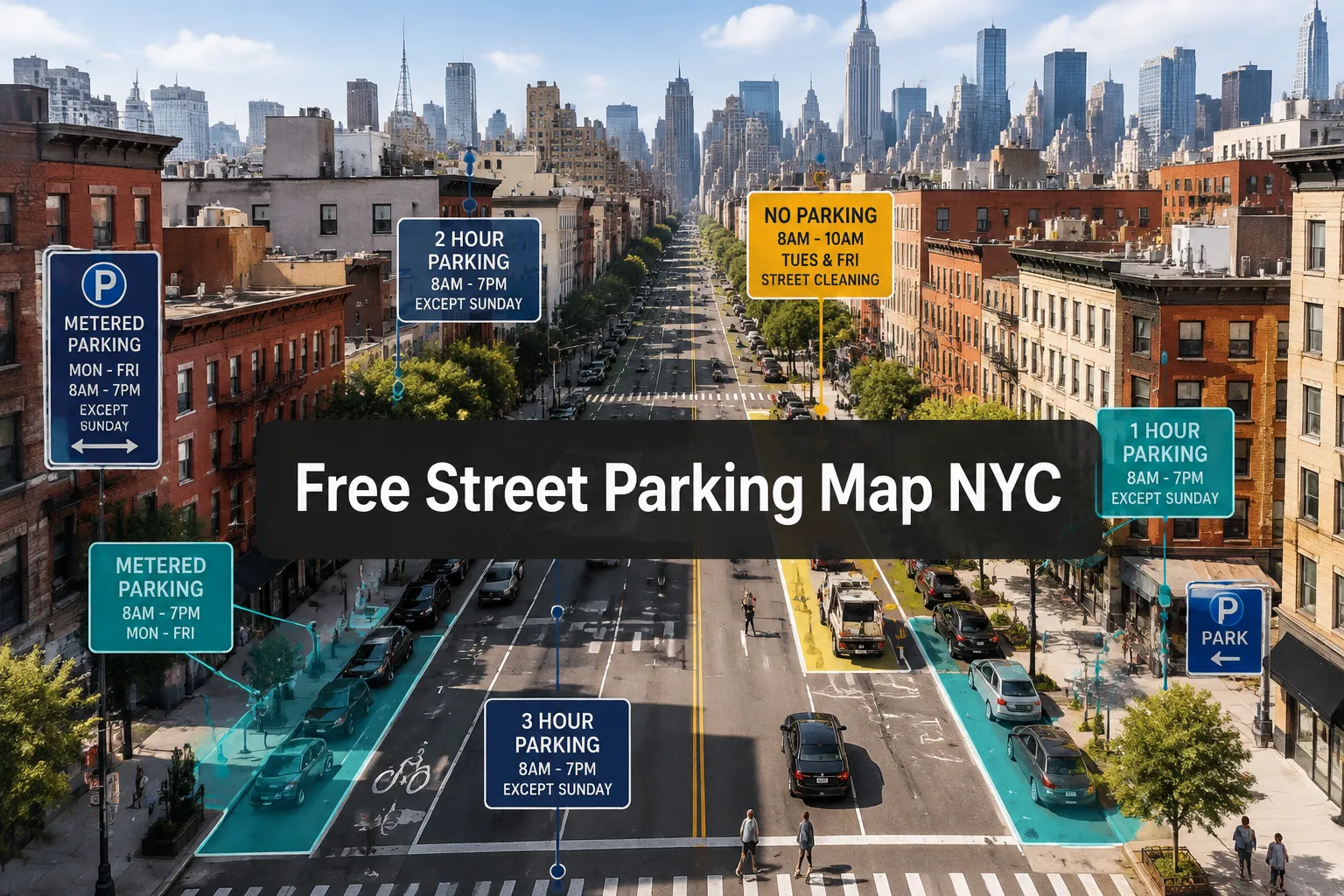
New York City drivers paid over $565 million in parking fines in 2025. Most violations stem from confusion over where and when street parking is actually free. No single official «free street parking map NYC» exists from the city government, but multiple tools now decode the complex web of signs, meters, and Alternate Side Parking rules to reveal thousands of legal, no-cost curb spaces across all five boroughs.
Finding free street parking in NYC requires understanding three moving parts: posted sign regulations, real-time Alternate Side Parking suspensions, and meter enforcement schedules. This guide breaks down the best free street parking map NYC resources, explains how to use official DOT data alongside third-party tools, and shows exactly when and where you can park without paying, or getting ticketed.
Key Takeaways
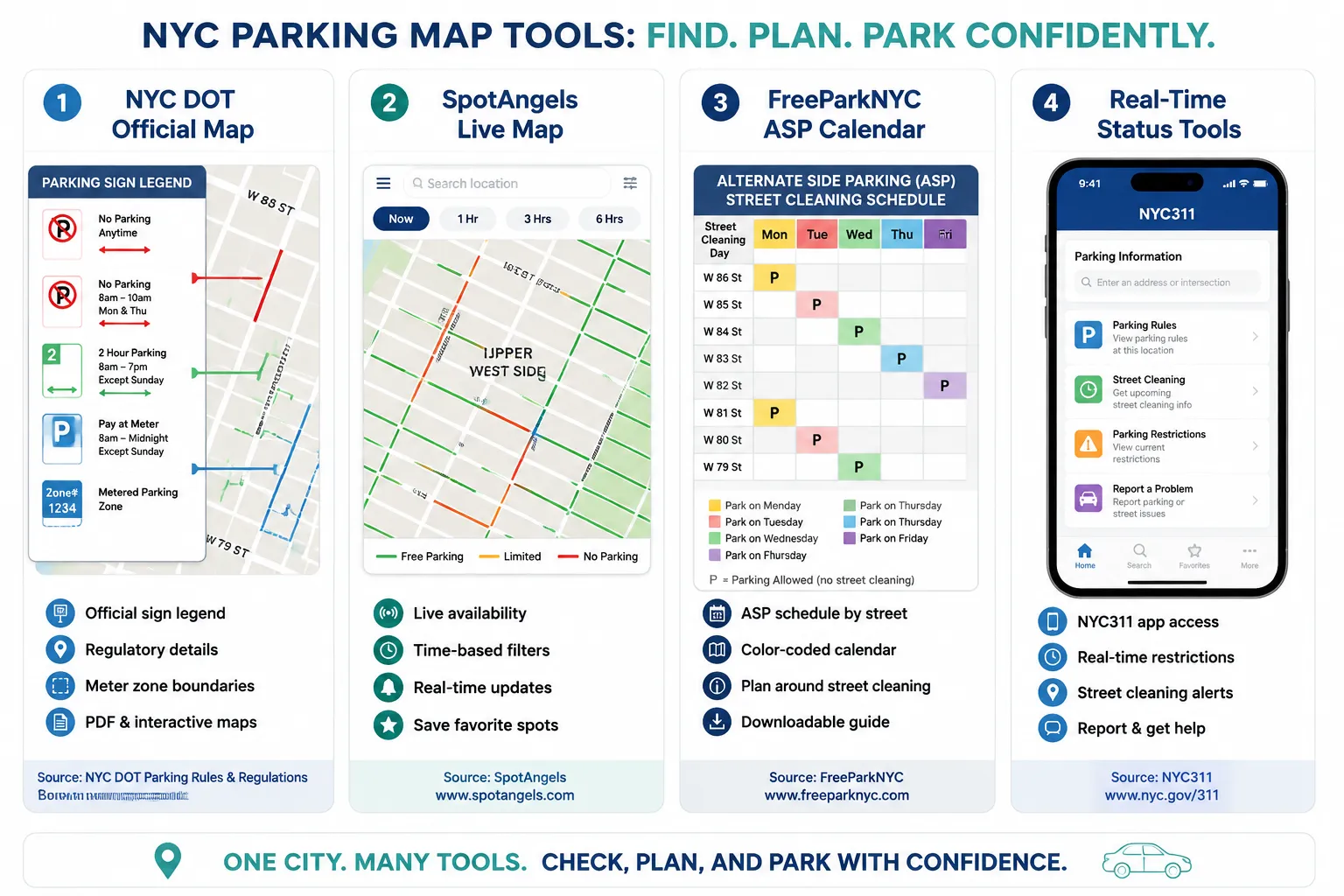
NYC DOT’s Parking Regulations Map at nycdotsigns.net is the authoritative source for all street parking signs and rules, but third-party apps like SpotAngels and FreeParkNYC overlay this data into user-friendly free parking maps
Free street parking is rare in Manhattan’s core (Times Square, Midtown, Upper East/West Sides) where most curbs are metered; residential outer-borough blocks offer the most consistent free options
Alternate Side Parking and meters are suspended every Sunday citywide, creating predictable weekly free-parking windows on thousands of blocks
Real-time ASP status via NYC311 Online, the NYC311 app, or @NYCASP is critical because day-of suspensions (snow, holidays) can instantly convert regulated spaces into legal free parking
Always cross-check any free street parking map NYC tool against physical street signs, posted regulations are the final legal authority
Understanding NYC’s Official Parking Data Sources
The NYC Department of Transportation maintains the Parking Regulations Map (nycdotsigns.net), which digitizes every parking sign across the city’s 6,300 miles of curb.[13][14] This interactive map displays sign locations, regulation types, and enforcement hours block-by-block. It’s the foundation all third-party free street parking map NYC tools build upon.
How to Use the Official DOT Map:
Enter your destination address or zoom to your target neighborhood
Click any curb segment to view active parking regulations
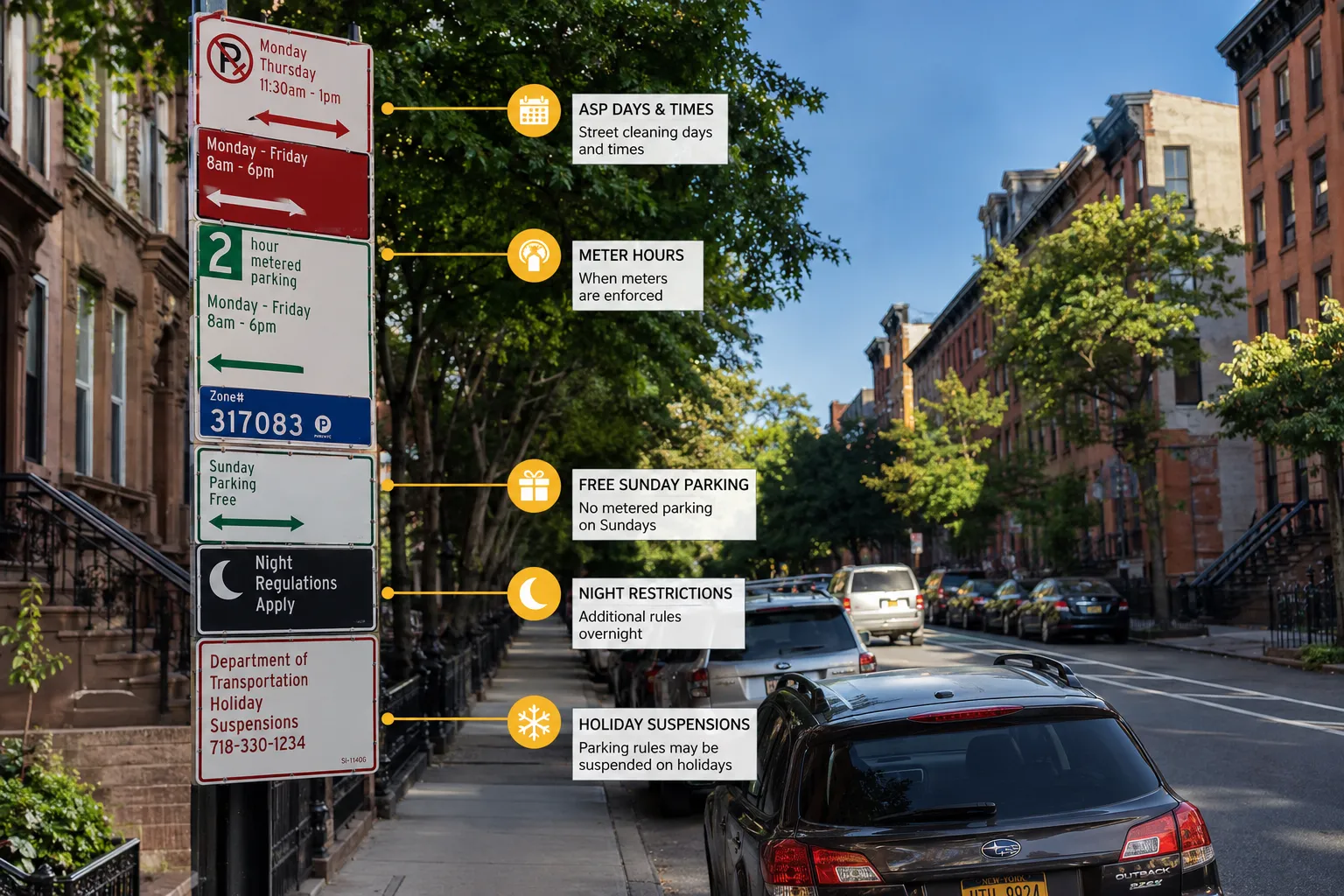
Review the street sign legend to decode restriction types (meter zones, ASP days, time limits)
The DOT map shows what’s posted, but it doesn’t highlight «free» zones in green or filter by your arrival time. That’s where specialized tools come in.
Official Alternate Side Parking Calendar:
NYC DOT publishes an annual ASP suspension calendar listing every legal and religious holiday when street cleaning rules don’t apply.[9][5] In 2026, ASP is suspended on 32 scheduled dates, plus every Sunday year-round. When ASP is suspended but meters remain in effect, only non-metered residential blocks become free, a crucial distinction many drivers miss.
Check real-time status daily via:
NYC311 Online or the NYC311 mobile app
@NYCASP on social media for same-day announcements
Snow operations frequently trigger multi-day ASP suspensions. In early 2026, NYC suspended ASP from January 31 through February 3, extended it February 8-10, again February 11-12 (snow plus Lincoln’s Birthday), February 12-14 and 16-18 (Presidents’ Day, Lunar New Year, Losar, Ash Wednesday), and February 23 through March 3 (Purim).[2][4][6][8][10] Meters stayed in effect during all these suspensions, so true free parking only expanded on unmetered blocks.[2][4][6][8][10]
Best Free Street Parking Map NYC Tools for 2026
SpotAngels NYC Free Parking Map
SpotAngels publishes a continuously updated 2026 NYC Free Parking Map that overlays parking rules on a live, color-coded map.[1] Free spots appear in green, metered zones in red, and time-restricted areas in yellow. The tool was last refreshed August 22, 2026, making it one of the most current citywide resources.[1]
Key Features:
Time-based filtering: Enter your location, arrival time, and parking duration to see available spots and prices
Neighborhood coverage: Detailed maps for all five boroughs, with granular data for high-demand areas like the Upper East Side, Upper West Side, Downtown Brooklyn, and Astoria
Off-peak insights: Identifies blocks that are metered during business hours but free evenings, nights, and Sundays
SpotAngels emphasizes that free on-street parking in Manhattan’s core (Times Square, Hudson Yards, Midtown) is extremely limited.[1] Most curb spaces are metered 8 AM, 10 PM Monday, Saturday, with only scattered free windows late at night or on Sundays. For consistent free options, focus on residential neighborhoods in the Bronx, Queens, Brooklyn, and Staten Island.
NYC Parking Map: Color-coded display showing where and when street parking is allowed, with filters for time of day and day of week
ASP Map: Dedicated visualization of alternate-side street cleaning schedules, helping drivers identify legal free-parking windows by matching their parking times to non-restricted periods
Both maps use official DOT sign data but present it in a simplified, scannable format. The ASP map is particularly useful for understanding complex multi-day cleaning schedules in dense neighborhoods.
How to Maximize Free Parking with FreeParkNYC:
Select your target neighborhood and intended parking duration
Use the ASP map to find blocks where cleaning occurs on days you won’t be parked
Verify that the block has no meters (check the NYC Parking Map or physical signs)
Confirm same-day ASP status via NYC311 before leaving your vehicle
NYC DOT Parking Regulations Map & Sign Legend
For absolute accuracy, always cross-reference third-party maps with the official DOT Parking Regulations Map.[13][14] Posted street signs are the final legal authority. If a free street parking map NYC tool shows a green «free» zone but the physical sign says «No Standing 8 AM, 6 PM,» the sign wins.
Critical Sign-Reading Tips:
«No Standing Except Trucks Loading/Unloading» means passenger cars cannot park, even if a map shows the block as unrestricted
Meter hoods or bagged meters do not automatically make a space free, check for temporary «No Parking» signs
Overlapping regulations (e.g., ASP + meter + 2-hour limit) all apply simultaneously; you must satisfy every restriction
Free curb parking in Manhattan is concentrated in upper residential neighborhoods (Washington Heights, Inwood, East Harlem) and becomes available evenings/nights in the Lower East Side and parts of the West Village. Midtown, the Financial District, and the Upper East/West Side cores are almost entirely metered.[1]
Brooklyn:
Outer Brooklyn neighborhoods, Bensonhurst, Bay Ridge, Sheepshead Bay, Canarsie, offer extensive free residential parking with standard ASP rules. Williamsburg, DUMBO, Park Slope, and Downtown Brooklyn are heavily metered, with free options limited to side streets during off-peak hours.[1]
Queens:
Queens has the most abundant free street parking citywide. Flushing, Astoria (away from the waterfront), Jackson Heights, Forest Hills, and eastern neighborhoods like Bayside and Bellerose feature thousands of unmetered residential blocks. Check ASP schedules carefully, many blocks alternate Monday/Thursday and Tuesday/Friday.[1]
The Bronx offers widespread free parking in residential areas like Pelham Bay, Morris Park, Fordham, and Riverdale. Commercial corridors (Fordham Road, Grand Concourse) have meters, but side streets one block away are typically free with ASP.[1]
Staten Island has the least restrictive parking in NYC. Most residential streets are free with minimal or no ASP. Metered zones exist only in commercial centers like St. George and along the North Shore near the ferry terminal.[1]
Avoiding Fines and Towing: Real-Time Status is Essential
Even the best free street parking map NYC tool can’t prevent tickets if you ignore real-time updates. ASP suspensions, snow emergencies, and special events change parking rules daily.
Critical Real-Time Resources:
NYC311 Online & App: Official same-day ASP status, updated by 6 AM each morning[7][9]
@NYCASP: Social media alerts for suspensions and enforcement changes
Park Rules Live ASP Tracker: Instant status for NYC and surrounding cities like Yonkers, Mount Vernon, and Buffalo
2026 ASP Suspension Pattern:
NYC suspended ASP for 17 days between January 31 and March 3, 2026, due to snow operations and holidays.[2][4][6][8][10][11][12] However, meters remained in effect during nearly all these suspensions, meaning drivers on metered blocks still had to pay. Only unmetered residential streets gained true free parking during these windows.
Fighting Unfair Parking Citations:
If you receive a ticket despite parking legally during a suspension or in a properly signed free zone, use the NYC Parking Education Hub resources:
Document the street signs, suspension notices, and your vehicle’s position with timestamped photos. Challenge tickets online via NYC DOT’s hearing system within 30 days.
Conclusion
Finding free street parking in NYC demands more than a static map. Combine official DOT data from the Parking Regulations Map with real-time ASP status from NYC311 and user-friendly tools like SpotAngels and FreeParkNYC. Focus your search on residential outer-borough neighborhoods, leverage Sunday’s citywide meter and ASP suspension, and always verify physical street signs before walking away from your vehicle.
Download SpotAngels or FreeParkNYC to filter free zones by time and location
Check NYC311 or @NYCASP every morning for same-day ASP status
Photograph street signs and your parking spot to document compliance
Explore off-street alternatives during high-demand periods via the NYC Parking Directory
Avoid fines and towing by staying informed. Use these free street parking map NYC tools together, not in isolation, to navigate the city’s complex curb regulations and keep your vehicle legal, safe, and ticket-free in 2026.
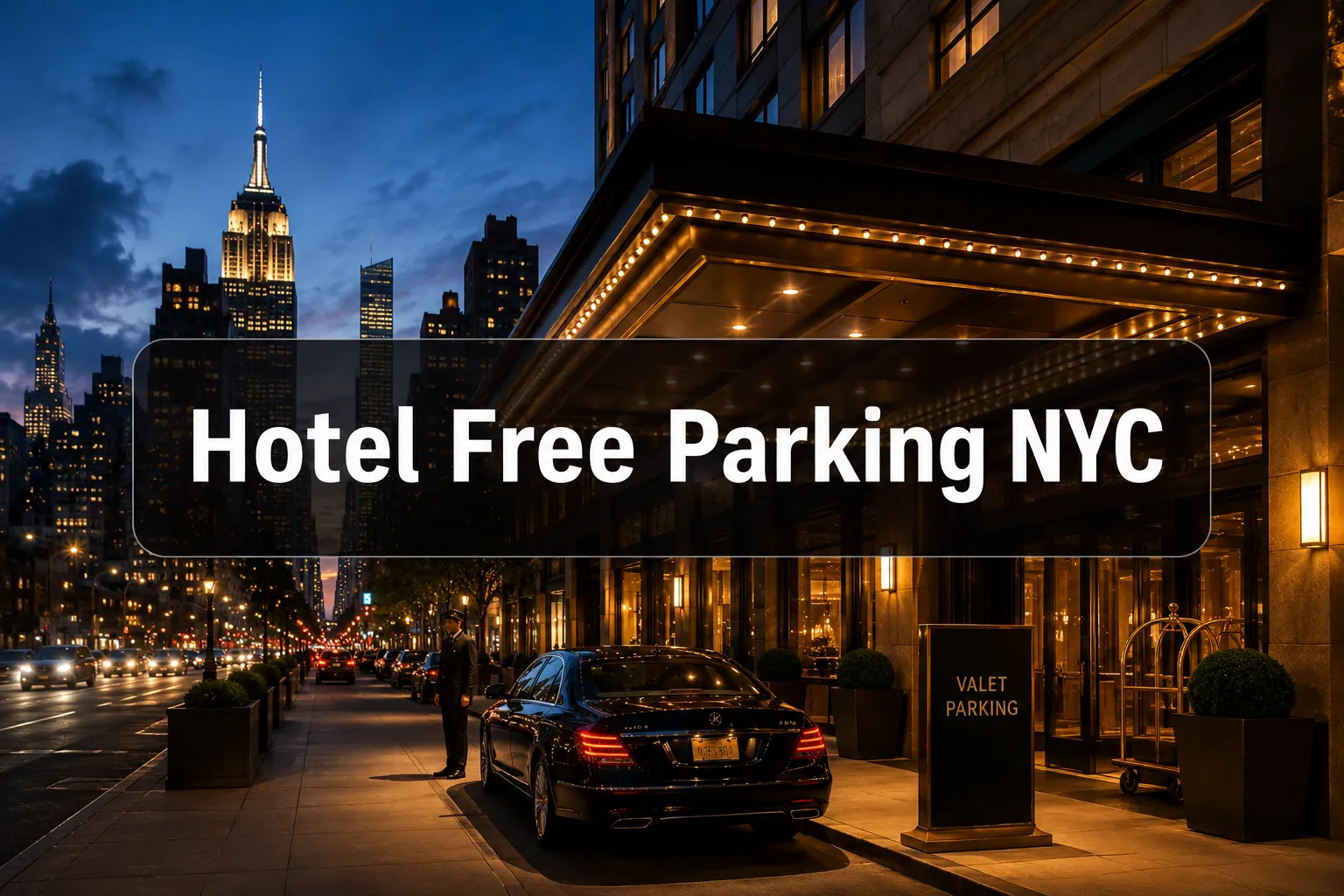
New York City parking costs average $60 per night at most hotels, but a growing number of properties now advertise genuinely free parking as part of the room rate. As of August 2026, major booking platforms list approximately 279 hotels with free parking across the five boroughs, though availability, vehicle limits, and rate-plan restrictions apply at nearly every property.[5] Understanding where to find a hotel with free parking NYC and how to navigate the fine print can save hundreds of dollars on multi-night stays while eliminating the stress of Alternate Side Parking enforcement and meter feeding.
Key Takeaways
Major booking platforms now maintain dedicated filters for hotels with free parking in NYC, with roughly 279 properties advertising some form of complimentary parking as of August 2026.[5]
Average nightly rates for NYC hotels with free parking run about $443, though deals as low as $68 have been recorded in the past week; Monday nights average $88 while Friday nights jump to $174.[5]
Most «free parking» offers come with significant constraints: one vehicle per room, no in-out privileges, vehicle-size restrictions, blackout dates, and first-come-first-served availability.
Properties offering free parking cluster in outer boroughs, near airports, and along major highways rather than in Manhattan’s core neighborhoods.
Direct confirmation with the hotel remains essential, promotional offers expire, spaces fill up, and rate-plan dependencies mean not every booking qualifies for complimentary parking.
Understanding Hotel Free Parking Options in NYC
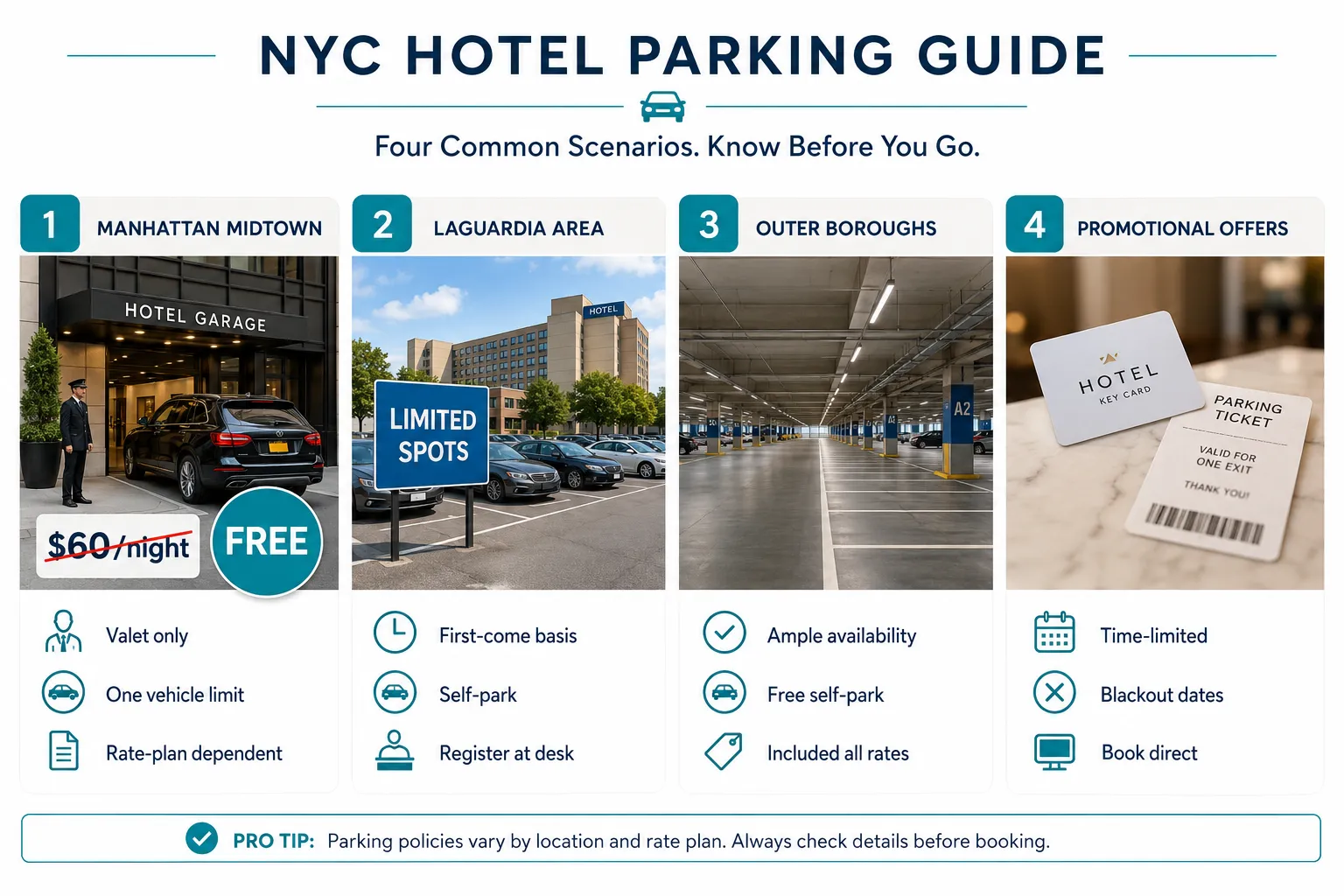
Free parking at NYC hotels falls into three distinct categories: bundled amenities at budget properties, promotional offers at upscale hotels, and permanent perks at outer-borough locations. Each model carries different restrictions and value propositions for travelers.
Bundled Amenities at Budget and Airport Hotels
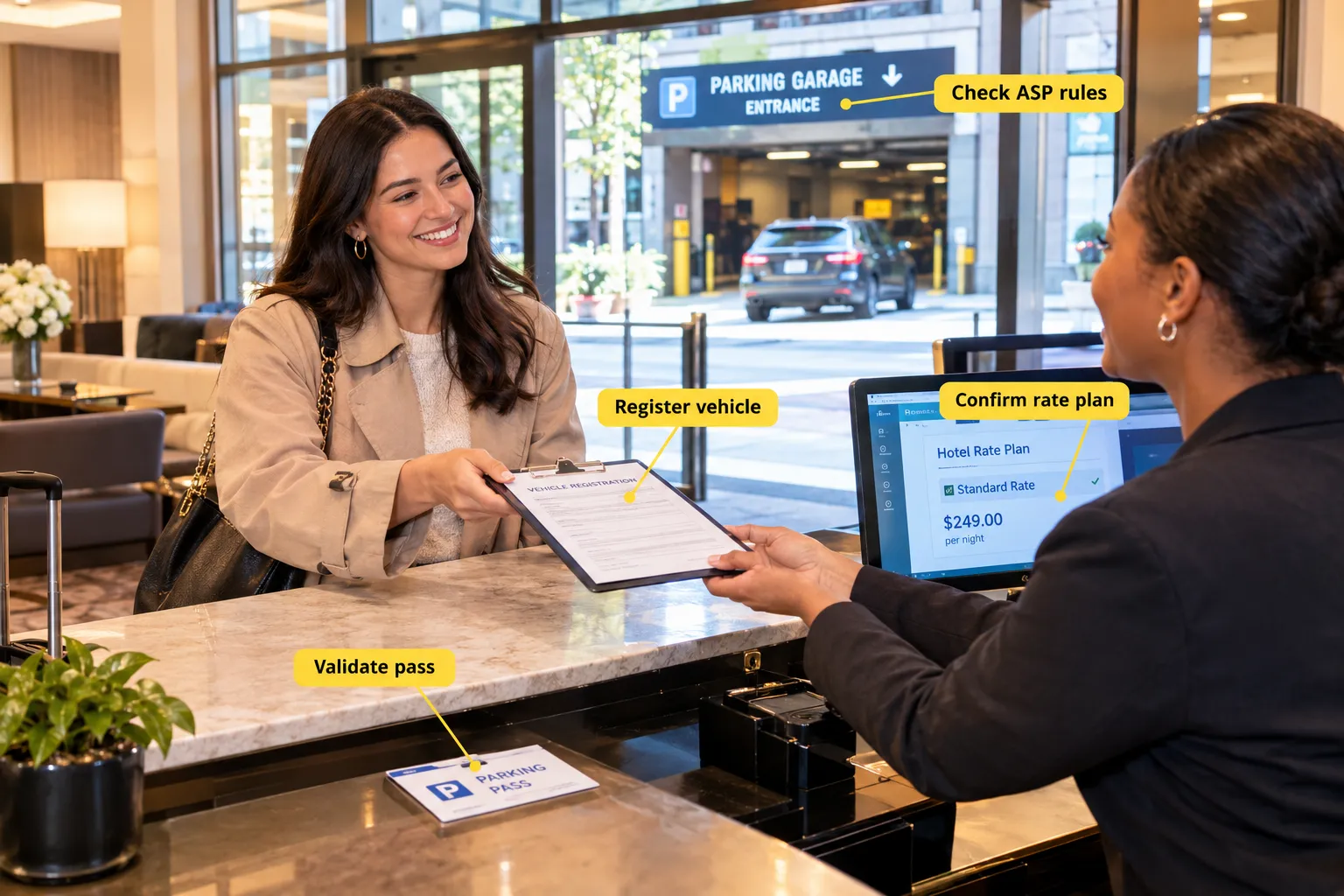
Hotels near LaGuardia, JFK, and Newark airports frequently include free self-parking as part of a no-extras package alongside complimentary breakfast and Wi-Fi.[13] Hampton Inn New York, LaGuardia Airport offers free parking on a limited, first-come-first-served basis, requiring guests to register vehicles at the front desk upon arrival.[12] Hotel Le Bleu in Brooklyn provides complimentary parking in a rear lot, though spaces cannot be reserved in advance and availability fluctuates with occupancy.[12]
These properties position free parking as a core value driver rather than a premium add-on. Tripadvisor reviews from August 2026 confirm guests routinely find «plenty of free parking in the garage behind the hotel» at select Brooklyn and Queens locations, provided they arrive early enough to claim a spot.[1] The trade-off: most budget hotels with free parking sit 30-60 minutes from Midtown Manhattan via public transit.
Promotional Offers at Upscale Manhattan Properties
Premium hotels occasionally bundle free valet parking into time-limited promotions to drive direct bookings. 1 Hotel Central Park’s «Free to Park, Free to Explore» offer (active through September 22, 2026) includes free valet parking for one vehicle per room alongside up to 30% off the nightly rate and flexible cancellation.[8] The promotion explicitly markets relief from Alternate Side Parking rules and meter fees, targeting drivers who would otherwise face Manhattan’s complex street regulations.[8]
Westgate New York Grand Central runs a similar «Hotels In NYC With FREE Parking» rate plan that includes complimentary valet for standard cars and SUVs, though oversized vehicles incur a $25 daily surcharge and no in-out privileges apply, guests who remove their vehicle and return face additional fees.[14] These offers demonstrate how Manhattan hotels use free parking as a promotional lever rather than a permanent amenity, with strict vehicle-type and rate-plan conditions attached.[14]
Permanent Free Parking in Outer Boroughs
Properties in the Bronx, Staten Island, and eastern Queens more commonly offer unrestricted free parking year-round. Hotels.com’s August 2026 data highlights Hotel Le Jolie and Gramercy Park Hotel as examples where parking remains complimentary for all guests regardless of rate plan, reflecting lower real-estate costs and ample off-street space in these neighborhoods.[11]
Travelers staying in Parking in Brooklyn, NYC or Parking in Queens, NYC neighborhoods can often find hotels with surface lots or attached garages offering unlimited free self-parking with no advance reservation required. The key consideration: commute times to Manhattan attractions typically exceed 45 minutes, and relying on a personal vehicle within the city means navigating Alternate Side Parking rules whenever parking on public streets.
How to Book a Hotel with Free Parking NYC
Booking platforms now universally support free-parking filters, but verifying the details directly with the hotel prevents costly surprises at check-in. Follow this step-by-step process to secure genuinely free parking.
Step 1: Use Platform Filters and Sort by Price
KAYAK, Expedia, Hotels.com, Travelocity, and Tripadvisor all maintain dedicated «Hotels with Free Parking» categories for New York City, updated through August 2026.[1][5][7][11][13] Apply the free-parking filter, then sort results by price to identify the lowest available rates. KAYAK’s data shows the cheapest recent price at $68 per night, though the platform average sits at $443.[5]
Book at least 87 days in advance to secure the best rates, KAYAK’s analysis confirms this lead time consistently yields lower prices for NYC hotels with free parking.[5] Target Monday arrivals when possible; average rates drop to $88 on Mondays compared to $174 on Fridays.[5]
Step 2: Read the Fine Print on Vehicle Limits and Rate Plans
Most free-parking offers restrict the benefit to one vehicle per room and tie it to specific rate plans. Westgate New York Grand Central’s free-parking rate explicitly excludes oversized vehicles (adding $25/day for those) and prohibits in-out privileges, meaning a single exit and re-entry can trigger additional charges.[14] 1 Hotel Central Park caps the benefit at one vehicle and lists blackout dates when the promotion does not apply.[8]
Check whether the hotel offers valet or self-parking. Valet-only properties may have limited hours for vehicle retrieval, while self-park garages typically provide 24-hour access. Confirm whether spaces can be reserved or operate first-come-first-served, properties like Hotel Le Bleu cannot guarantee availability even when parking is advertised as free.[12]
Step 3: Verify Alternate Side Parking and Street Rules
If the hotel’s free parking is a surface lot or relies on adjacent street spaces, confirm whether Alternate Side Parking enforcement applies. Hotels in the Bronx and outer Queens may offer free street parking that requires moving vehicles twice weekly for street cleaning. Check the real-time ASP status for the hotel’s neighborhood to understand whether enforcement is suspended on your arrival dates.
Properties advertising «free parking» sometimes mean they will not charge a parking fee but expect guests to comply with municipal street regulations. Clarify whether the hotel provides a private lot exempt from ASP rules or simply allows street parking without an additional hotel fee.
Step 4: Call the Hotel Directly Before Arrival
Booking-platform listings lag behind real-time availability and policy changes. Call the hotel 48-72 hours before check-in to confirm:
Current availability of free parking spaces
Vehicle registration requirements at the front desk
Any recent changes to the free-parking policy
Whether your specific reservation rate qualifies for complimentary parking
Garage height clearances if driving an SUV or van
Tripadvisor reviews from August 2026 repeatedly mention the need to «register the vehicle at the front desk» even when parking is free, indicating that hotels track which cars belong to guests to prevent unauthorized use of limited spaces.[1] Skipping this registration step can result in towing, even at properties advertising free parking.
Step 5: Have a Backup Plan for Overflow
When hotel parking fills, identify nearby alternatives in advance. Parking in Manhattan, NYC and Parking in Bronx, NYC directories list off-street garages and lots with published rates, many offering early-bird or overnight specials that undercut hotel valet fees. Apps like Best Parking Apps NYC 2026 aggregate real-time availability and pricing across hundreds of facilities.
For extended stays, consider monthly parking at garages near the hotel. Facilities such as MPG Parking and Quik Park offer monthly contracts that can cost less per day than nightly hotel valet rates, even when the hotel advertises «free» parking with restrictive conditions.
Common Restrictions on Free Hotel Parking in NYC
«Free parking» rarely means unlimited, unrestricted access. Nearly every NYC hotel with complimentary parking imposes at least one of the following limitations.
One Vehicle Per Room Maximum
Both 1 Hotel Central Park and Westgate New York Grand Central cap free parking at one vehicle per room, regardless of room size or number of guests.[8][14] Families or groups traveling with multiple cars must pay standard rates for additional vehicles, which can exceed $60 per night at Manhattan properties.
No In-Out Privileges
Westgate’s free-parking terms explicitly state that removing a vehicle and returning triggers additional fees, effectively locking the car in the garage for the duration of the stay.[14] This restriction makes free parking impractical for travelers planning day trips outside the city or needing vehicle access for business appointments.
Vehicle Size and Type Restrictions
Westgate charges an extra $25 per day for oversized vehicles under its free-parking rate, defining standard eligibility as cars and SUVs only.[14] Vans, trucks, and vehicles with roof racks or modifications may not qualify for complimentary parking even when the base rate includes it.
Rate-Plan and Blackout Date Dependencies
Promotional free-parking offers tie the benefit to specific booking codes and exclude peak travel dates. 1 Hotel Central Park’s offer lists blackout dates and requires booking the «Free to Park, Free to Explore» rate directly, third-party reservations and standard rates do not include the parking benefit.[8] Always confirm that your exact reservation qualifies rather than assuming the hotel’s advertised free parking applies universally.
First-Come-First-Served Availability
Hotels with limited parking cannot guarantee space even for confirmed reservations. Hampton Inn New York, LaGuardia Airport and Hotel Le Bleu both operate on a first-come-first-served basis, meaning late arrivals may find the lot full and need to seek overflow parking at their own expense.[12] This risk is highest on weekends and during major NYC events when hotel occupancy peaks.
Regional Pricing and Availability Patterns
Location dramatically impacts both the likelihood of finding free parking and the overall room rate. Hotels with free parking cluster in predictable geographic patterns across New York City.
Manhattan: Rare and Promotional
Truly free parking in Manhattan remains scarce outside time-limited promotions. KAYAK data from November 2025 reported an average of $118 per night for Manhattan hotels with free parking, though sample inconsistencies suggest this figure may blend non-NYC locations.[10] Current August 2026 data shows Manhattan properties with free parking averaging significantly higher, closer to the citywide $443 mean.[5]
Expect Manhattan free-parking offers to come with the most restrictive terms: valet-only, one vehicle, no in-out, and promotional rate dependencies. The few properties offering it year-round typically sit north of 125th Street or along the far west side near the Hudson River.
Outer Boroughs: More Common, Lower Rates
Brooklyn, Queens, the Bronx, and Staten Island hotels more frequently include free parking as a standard amenity. Hotels.com’s August 2026 listings identify multiple properties in these boroughs where parking is complimentary across all rate plans.[11] Room rates in outer-borough hotels with free parking average $150,$250 per night, roughly half the Manhattan equivalent.
Travelers staying in Parking in Astoria, Queens or Parking in Flushing, Queens neighborhoods benefit from both free hotel parking and easier street parking when exploring the local area, though commutes to Midtown Manhattan require 30-45 minutes on the subway.
Airport Hotels: Consistent Availability
Properties near LaGuardia, JFK, and Newark airports maintain the most reliable free-parking inventory. These hotels cater to fly-in guests who need secure vehicle storage during trips, making complimentary parking a competitive necessity. Rates typically range $100,$180 per night, with parking included in the base price rather than as an add-on.[12][13]
Airport-area hotels also commonly offer free shuttle service to terminals, making them practical for travelers who want to avoid long-term airport parking fees ($40,$50 per day at JFK and LaGuardia) while maintaining vehicle access before and after flights.
Alternatives When Hotel Free Parking Is Unavailable
When preferred hotels lack free parking or spaces fill up, several cost-effective alternatives exist for drivers staying in NYC.
Monthly Garage Contracts
For stays exceeding one week, monthly parking contracts at nearby garages often cost less per day than nightly hotel rates. Facilities in Parking in Manhattan, NYC and Parking in Bronx, NYC offer monthly rates starting around $300,$400, equivalent to $10,$13 per day for a 30-day period. This approach works best when the hotel sits within walking distance of the garage.
Early-Bird and Overnight Specials
Many commercial garages offer discounted overnight rates for cars entering after 6 PM and exiting before 10 AM, with prices as low as $15,$25 per night in outer-borough locations. Check Parking Garages & Savings for current promotions and compare rates across multiple facilities near the hotel.
Strategic Street Parking with ASP Monitoring
Experienced NYC drivers can use free street parking legally by monitoring Alternate Side Parking suspension calendars and moving vehicles only when enforcement is active. This strategy requires daily attention to ASP status and willingness to relocate the car 1-2 times per week, but eliminates parking costs entirely in neighborhoods with available curb space.
Download a real-time ASP tracker to receive alerts before street-cleaning enforcement begins. Missing an ASP move can result in a $65 ticket plus potential towing, quickly erasing any savings from avoiding hotel parking fees. Understand how to fight unfair parking citations if disputes arise.
Park Outside NYC and Use Transit
For travelers whose itineraries center on Manhattan attractions rather than outer-borough driving, parking in Yonkers, New Rochelle, or other nearby municipalities and commuting via Metro-North or subway can reduce costs. Check Yonkers Alternate Side Parking and New Rochelle Alternate Side Parking for local street rules, then use commuter rail to reach Midtown in 30-40 minutes.
This approach works best for multi-day stays where the vehicle remains parked continuously. Daily round-trip Metro-North fares ($15,$20) plus free street parking in Westchester often total less than a single night of Manhattan hotel parking.
Conclusion
Finding a hotel with free parking NYC in 2026 requires filtering booking platforms carefully, reading rate-plan fine print, and confirming details directly with properties before arrival. While roughly 279 hotels across the five boroughs advertise some form of complimentary parking, nearly all impose restrictions on vehicle count, size, in-out privileges, or rate eligibility.[5] Budget and airport hotels in outer boroughs offer the most consistent free-parking availability, while Manhattan properties reserve the perk for promotional offers with blackout dates and strict terms.[8][14]
Take these steps now: Use KAYAK or Expedia’s free-parking filters to identify candidate hotels, book at least 87 days in advance to secure the lowest rates, and call the hotel 48 hours before check-in to verify space availability and registration requirements.[5] Set up real-time Alternate Side Parking alerts if relying on street parking at any point, and bookmark nearby garage directories as backup options. With proper planning and direct confirmation, travelers can eliminate $300,$600 in parking costs over a week-long NYC stay while avoiding the stress of meter feeding and ASP violations.
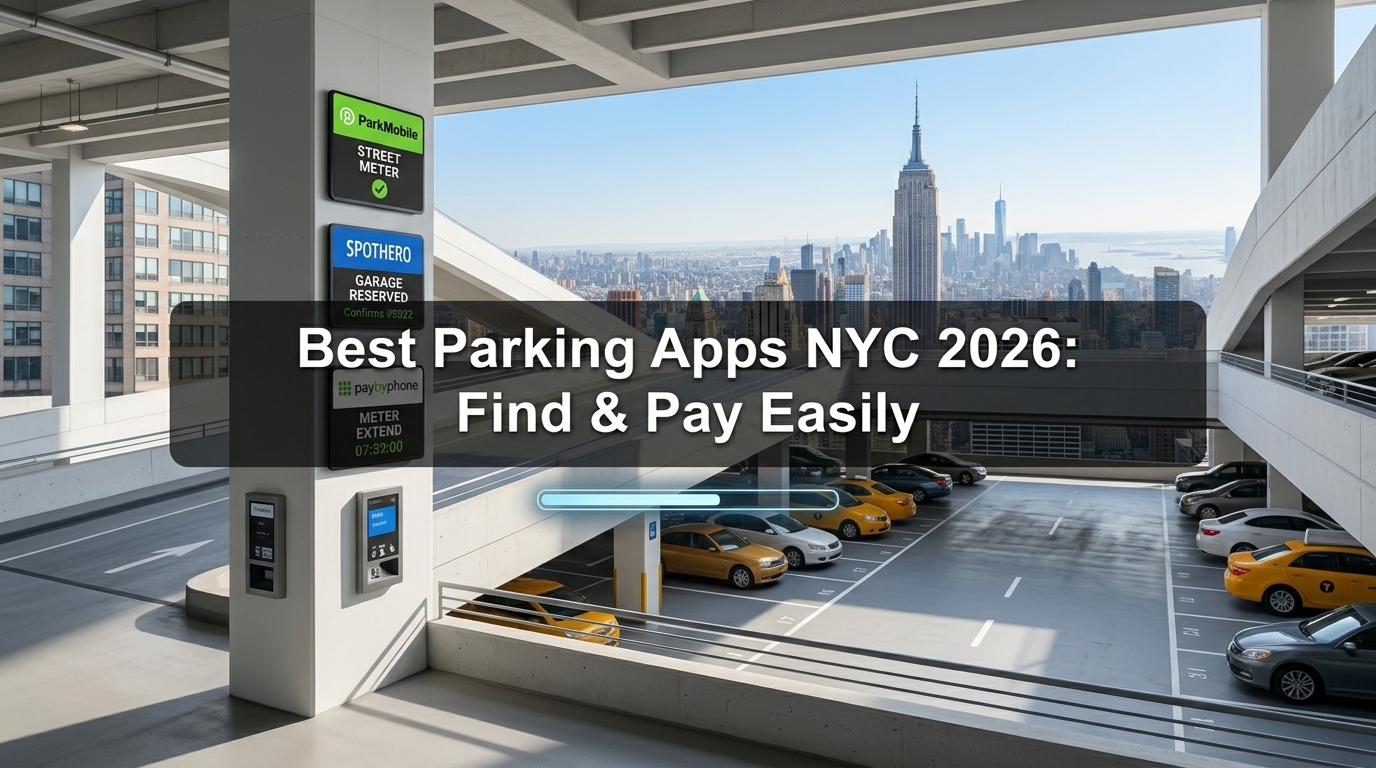
Navigating the concrete jungle that is New York City can be an exhilarating experience, but the sheer thought of finding parking often sends shivers down even the most seasoned driver’s spine. Fear not, urban adventurers! In 2026, technology has come to the rescue, transforming the daunting task of finding a spot into a streamlined, stress-free process. This comprehensive guide will unveil the best parking apps NYC has to offer, helping you conquer the city’s parking challenges with confidence and ease. Get ready to reclaim your time and peace of mind!
Key Takeaways
Parking apps are essential for finding and paying for parking in NYC, saving time and reducing stress.
Features like real-time availability, reservation options, and diverse payment methods vary significantly between apps.
Understanding an app’s coverage for street versus garage parking is crucial for NYC drivers.
Comparing fees, user interface, and customer support can help you choose the ideal app for your specific needs.
The right parking app can dramatically improve your New York City driving experience in 2026.
Mastering NYC Parking: Your Digital Toolkit for 2026
New York City parking is infamous for its complexity, from alternate side parking rules to sky-high garage rates. Thankfully, a robust ecosystem of parking apps has emerged to simplify this ordeal. These digital tools offer a range of functionalities, from locating available spaces in real-time to facilitating cashless payments. For anyone regularly driving in the five boroughs, utilizing the best parking apps NYC residents and visitors rely on is no longer a luxury but a necessity.
Choosing the right app depends on your driving habits and specific needs. Are you primarily looking for street parking? Do you prefer the convenience of reserving a garage spot in advance? Or perhaps you need an app that integrates with public transport options? We’ll dive into the top contenders, evaluating their strengths and helping you determine which best fits your urban journey.
Why Parking Apps Are Indispensable in NYC
The benefits of using parking apps in New York City are manifold:
Time-Saving: No more endless circling blocks or fumbling for quarters. Find a spot and pay for it directly from your phone.
Stress Reduction: Real-time availability minimizes uncertainty, making your commute or outing far less stressful.
Cost-Efficiency: Some apps allow you to compare rates, potentially saving you money on garage parking.
Convenience: Extend your parking time remotely, receive alerts before your meter expires, and avoid tickets.
Information at Your Fingertips: Access details like parking rules, hours of operation, and even EV charging availability.
Top Contenders for the Best Parking Apps NYC Has in 2026
The market for parking apps is dynamic, with new features and expanded coverage constantly being introduced. As of 2026, several apps stand out for their reliability, user-friendliness, and comprehensive services tailored to the unique demands of New York City parking. Let’s explore the leading options.
1. ParkMobile: The Ubiquitous Choice
ParkMobile is arguably one of the most widely recognized and utilized parking apps across North America, and its presence in NYC is substantial. It’s an excellent choice for street parking, allowing users to pay for meter parking directly from their smartphones.
Key Features:
Extensive Coverage: Widely available at metered street parking zones throughout NYC.
Easy Payment: Link your credit card and pay with a few taps.
Remote Extension: Extend your parking session without returning to your vehicle.
Customizable Alerts: Get notifications before your parking time expires.
Garage Integration: While primarily known for street parking, ParkMobile is expanding its garage reservation features in select NYC locations.
Pros: Widely accepted, user-friendly interface, excellent for street parking. Cons: Garage options can still be limited in some areas compared to dedicated garage apps.
2. SpotHero: Your Go-To for Garage Reservations
If your parking needs lean towards garages and off-street lots, SpotHero is likely your champion. This app excels at helping drivers find, compare, and reserve parking spots in advance, often at discounted rates.
Key Features:
Advance Reservations: Book a spot hours, days, or even weeks ahead.
Price Comparison: View and compare rates from various garages near your destination.
Detailed Listings: Information on garage amenities, entry/exit instructions, and height restrictions.
Discounted Rates: Often offers rates lower than drive-up prices.
Flexible Options: Hourly, daily, and even monthly parking options available.
Pros: Ideal for planned trips and event parking, significant savings on garage spots, vast selection of garages. Cons: Not suitable for metered street parking, requires advance booking for best deals.
3. PayByPhone: Simple & Effective Meter Parking
PayByPhone offers a straightforward and efficient solution for metered street parking. Its simplicity is a huge draw for users who want to quickly pay and manage their parking sessions without unnecessary frills.
Key Features:
Quick Payment: Fast and secure payments for street meters.
Remote Management: Extend, stop, or view your parking session history.
Parking Reminders: Optional SMS reminders before your time runs out.
Multi-Vehicle Support: Manage parking for multiple vehicles from one account.
Pros: Very easy to use, widely accepted at NYC meters, great for quick transactions. Cons: Primarily focused on street parking, fewer features for garage reservations.
4. BestPark by Park-It-Market: A Local NYC Favorite
While not as globally recognized as some others, BestPark by Park-It-Market is a local solution that specifically caters to the complexities of NYC parking garages. It’s particularly useful for those seeking a more direct connection to local parking facilities.
Key Features:
NYC-Specific Focus: Designed with the unique challenges of New York City parking in mind.
Real-Time Inventory: Connects users directly to participating garages, showing live availability.
Exclusive Deals: Often features special discounts and offers from local garages.
User-Friendly Map: Interactive map showing garage locations and prices.
Pros: Hyper-focused on NYC parking, potentially exclusive local deals, supports local businesses. Cons: Coverage might be less extensive than national apps, primarily for garage parking.
5. Way.com: More Than Just Parking
Way.com offers a broader suite of services beyond just parking, including car washes and roadside assistance, but its parking module is quite robust for NYC. It often pulls from a wide network of garages and lots.
Key Features:
Garage & Lot Reservations: Find and reserve spots in various off-street locations.
Comparative Pricing: View prices from multiple providers.
Bundle Deals: Sometimes offers packages that combine parking with other car services.
User Reviews: Access reviews from other drivers to help choose a spot.
Pros: Comprehensive platform, often good deals, broader car service integration. Cons: Interface can be a bit busy due to multiple services, primarily for off-street parking.
6. NYC Parking Garages App: A Focused Approach
This app, often developed by local entities or data aggregators, provides a dedicated directory and booking platform specifically for parking garages within New York City. Its strength lies in its specialized focus.
Key Features:
Dedicated NYC Garage Database: Extensive list of parking garages across all boroughs.
Filter Options: Search by location, price, amenities, and vehicle size.
Real-Time Updates: Provides some level of real-time availability for participating garages.
Direction Integration: Seamless navigation to your chosen garage.
Pros: Highly specialized for NYC garages, comprehensive listings. Cons: Limited to garage parking, may not offer payment integration for all facilities.
Comparative Overview: Choosing the Best Parking Apps NYC Offers
To help you make an informed decision, here’s a comparative look at how these apps stack up:
| Feature/App | ParkMobile | SpotHero | PayByPhone | BestPark by Park-It-Market | Way.com | NYC Parking Garages App |
| — | — | — | — | — | — | — |
| Primary Use | Street/Limited Garage | Garage Reservations | Street Parking | NYC Garage Reservations | Garage/Off-Street | NYC Garage Directory |
| Real-Time Availability | Yes (Street) | Yes (Garages) | Yes (Street) | Yes (Garages) | Yes (Garages) | Yes (for some) |
| Advance Reservations | Limited | Yes | No | Yes | Yes | Yes (for some) |
| Payment Integration | Full | Full | Full | Full | Full | Varies |
| Cost Savings | Moderate | High | Moderate | High | Moderate | Varies |
| User-Friendliness | High | High | Very High | High | Moderate | Moderate |
| NYC Coverage | Extensive (Street) | Extensive (Garages) | Extensive (Street) | Strong (Garages) | Good (Garages) | Extensive (Garages) |
| Notifications | Yes | Yes | Yes | No | Yes | No |
Tips for Using Parking Apps Effectively in NYC
Even with the best parking apps NYC has to offer, a little strategic thinking goes a long way. Here are some pro tips for maximizing your parking success:
Download Multiple Apps: Different apps excel in different situations. Having 2-3 of the top contenders on your phone ensures you’re prepared for any parking scenario.
Check Rates & Reviews: Always compare prices, especially for garage parking. User reviews can also provide valuable insights into a location’s accessibility or service quality.
Understand Local Rules: Apps are incredibly helpful, but they don’t replace the need to understand NYC’s complex parking regulations, especially for street parking (e.g., alternate side parking). Always double-check signage.
Enable Notifications: Set up parking expiration alerts to avoid costly tickets.
Pre-Book for Events: If you’re heading to a concert, game, or theater show, reserve your parking spot in advance with an app like SpotHero to guarantee a space and often save money.
Consider Loyalty Programs: Some apps or affiliated garages offer loyalty points or discounts for frequent users.
Verify Your Location: When paying for street parking, always double-check that the zone number in the app matches the signage on the street. A wrong zone number can still lead to a ticket!
Keep Your Phone Charged: A dead phone means no parking app! Carry a portable charger, especially when driving in the city.
The Future of Parking in New York City in 2026 and Beyond
As 2026 unfolds, the evolution of parking apps in NYC continues. We can expect to see further integration with smart city infrastructure, real-time traffic data, and even predictive analytics to guide drivers to available spots before they even arrive. The rise of electric vehicles will also influence app development, with more features for finding EV charging stations alongside parking. The goal remains the same: to make parking in one of the world’s busiest cities as seamless and efficient as possible.
Conclusion
Finding parking in New York City no longer has to be a source of dread. With the advent of sophisticated parking apps, drivers in 2026 have powerful tools at their disposal to locate, reserve, and pay for parking with unprecedented ease. Whether you prioritize street parking flexibility or guaranteed garage spots, there’s an app tailored to your needs. By downloading a few of the best parking apps NYC residents and visitors rely on, you can transform your urban driving experience from frustrating to fantastic. So, download your chosen apps, keep your phone charged, and navigate the streets of NYC like a pro!
Actionable Next Steps:
1. Download: Install 2-3 of the recommended apps that best fit your typical parking needs (e.g., ParkMobile for street, SpotHero for garages).
2. Set Up: Create your accounts and link your preferred payment methods.
3. Explore: Familiarize yourself with each app’s interface and features before you’re in a rush.
4. Practice: Try using an app for a short, low-stakes parking trip to get comfortable.