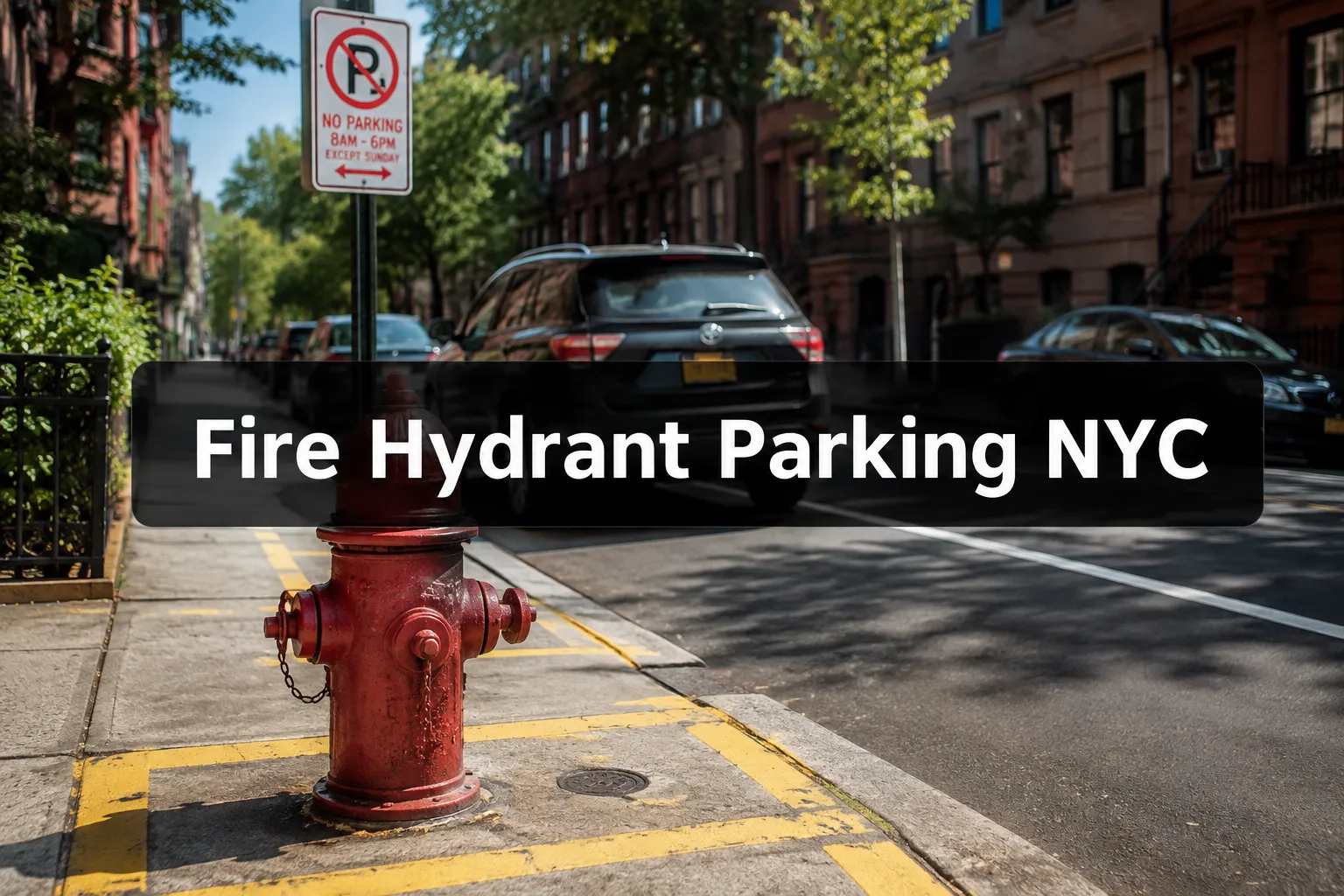
Categoría: ASP

  • How Close to a Fire Hydrant Can You Park NYC: Official 2026 Rules

    How Close to a Fire Hydrant Can You Park NYC: Official 2026 Rules

    NYC issues over 10 million parking tickets annually, and fire hydrant violations rank among the most common, and most expensive, mistakes drivers make. Understanding exactly how close to a fire hydrant can you park NYC is not optional; it’s essential to avoid $115 fines and potential towing.

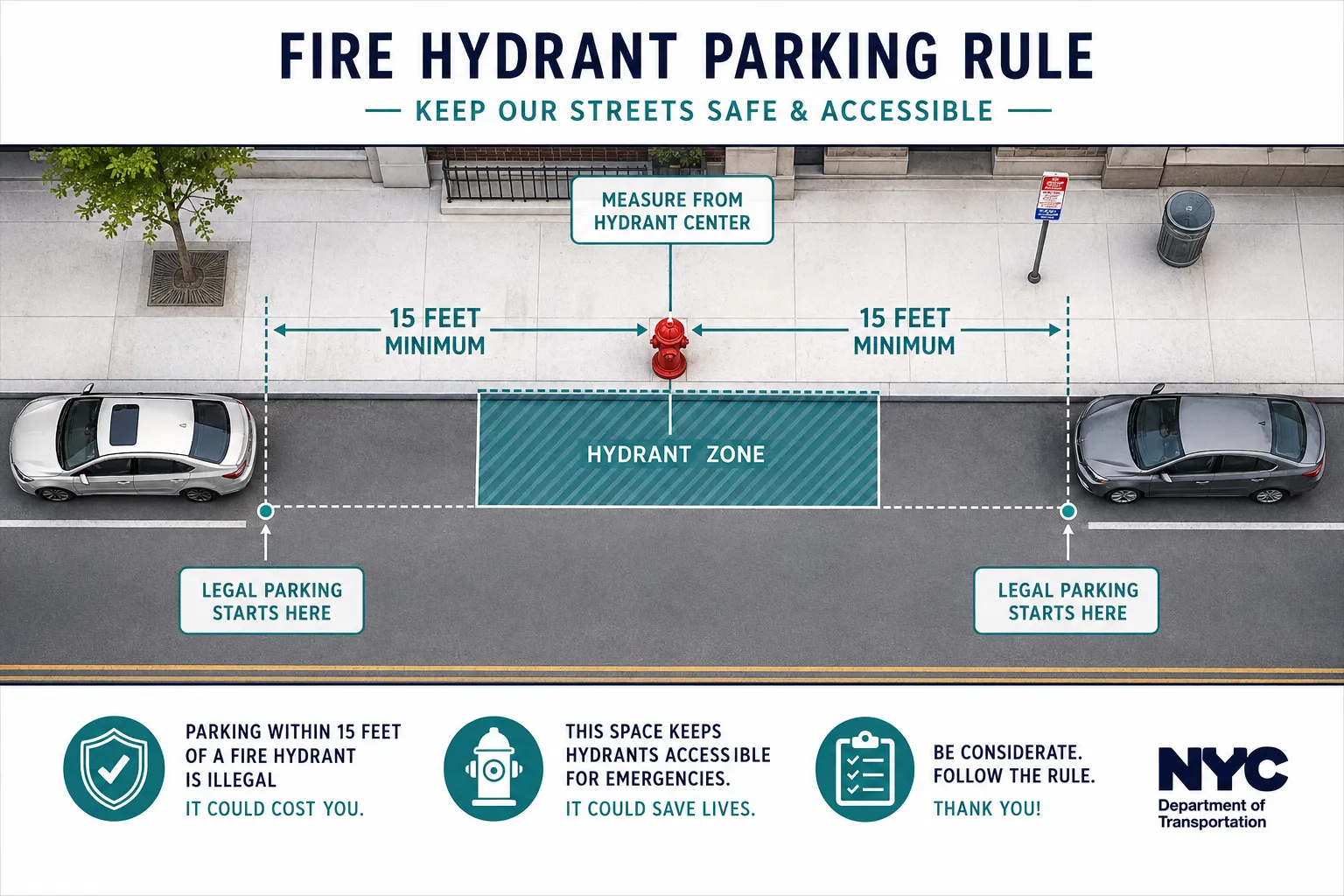
    The official rule is absolute: 15 feet minimum distance from any fire hydrant, measured from the hydrant itself to the nearest part of your vehicle, on both sides of the hydrant, 24/7. This applies across all five boroughs and overrides painted curb markings, which are often faded or misleading.[1][2]

    Key Takeaways

    • NYC law prohibits parking within 15 feet of a fire hydrant on either side, before or after the hydrant, citywide, including floating parking lanes next to protected bike lanes.
    • The 15-foot buffer equals approximately 4.6 meters, roughly one to one-and-a-half car lengths, or five to six walking paces.
    • A limited daylight «standing» exception allows passenger cars to remain at a hydrant only if the driver stays in the operator’s seat, engine running, ready to move instantly, not true parking.
    • Violation code 40 carries a standard fine of approximately $115 in 2026, and enforcement is strict regardless of curb paint condition.
    • Measure distance from the hydrant center to your vehicle’s nearest point (typically front or rear bumper corner), not from painted curb lines.

    Official NYC Fire Hydrant Parking Distance: The 15-Foot Rule

    NYC Traffic Rules §4-08 establishes the legal standard: stopping, standing, or parking within fifteen feet of a fire hydrant is prohibited.[5] This distance applies to both the approach side and the departure side of the hydrant, drivers must leave at least 15 feet clear before the hydrant and at least 15 feet after it.[3][10]
    Official NYC Fire Hydrant Parking Distance: The 15-Foot Rule

    The NYC Department of Transportation’s 2026 parking regulations page, updated in late August, explicitly confirms the 15-foot rule remains in effect citywide, including newer street designs such as protected bike lanes with floating parking lanes.[2] The rule has been codified since at least January 2025 and has not been modified in subsequent updates through mid-2026.[5][2]

    Measure from the hydrant itself, not curb paint. Many drivers mistakenly rely on yellow painted curb zones around hydrants to judge legal parking boundaries. Official guidance warns that painted curbs are not the legal standard, the 15-foot measurement always controls, even where paint is missing, faded, or inaccurate.[1][8] Calculate distance from the hydrant’s physical location to the closest part of your vehicle, typically the front or rear bumper corner.[8][7]

    For quick street-level estimation, 15 feet equals roughly:

    • 4.6 meters (metric)
    • One to one-and-a-half car lengths (depending on vehicle size)
    • Five to six normal walking paces (adult stride)[8][7]

    The rule applies 24 hours a day, seven days a week, with only a narrow daylight exception discussed below.[6][3]

    Understanding the Daylight Standing Exception (Not a Parking Permit)

    NYC Traffic Rules §4-08 includes a specific exception that confuses many drivers: a passenger car may stand (not park) directly next to a fire hydrant during daylight hours, sunrise to sunset, under strict conditions.[5][6]

    All four conditions must be met simultaneously:

    1. Standing is otherwise permitted at that location.
    2. The driver remains in the operator’s seat at all times.
    3. The engine is running and ready for immediate operation.
    4. The vehicle is moved instantly upon approach of fire apparatus or instruction from police, fire, or traffic officials.[5][3]

    Practical enforcement guidance stresses this is not permission to park and leave your car, even briefly.[6][10][12] If you exit the vehicle, lock the doors, or walk away, even for 30 seconds, you are parked, not standing, and the 15-foot rule applies in full.[6][3] Ticket-defense experts report that many hydrant violations occur when drivers misinterpret this exception and step out «just for a minute» within the buffer zone.[10][12]

    For practical purposes, treat the 15-foot rule as a strict no-parking zone 24/7. Any unattended vehicle within that buffer is subject to violation code 40, regardless of time of day.[6][12][3]

    How to Measure 15 Feet Accurately on NYC Streets

    Enforcement measures from the hydrant center to the nearest part of your vehicle,not to your tires, not to the car’s center, and not from painted lines.[8][7] The nearest point is usually the front bumper corner (when parking ahead of a hydrant) or the rear bumper corner (when parking behind a hydrant).[8]

    Quick measurement methods:

    • Walking paces: Take five to six normal adult strides from the hydrant to your bumper. If you reach your car in fewer than five paces, you’re too close.[8][7]
    • Car-length rule: Leave at least one full car length (preferably one and a half) between the hydrant and your vehicle.[8]
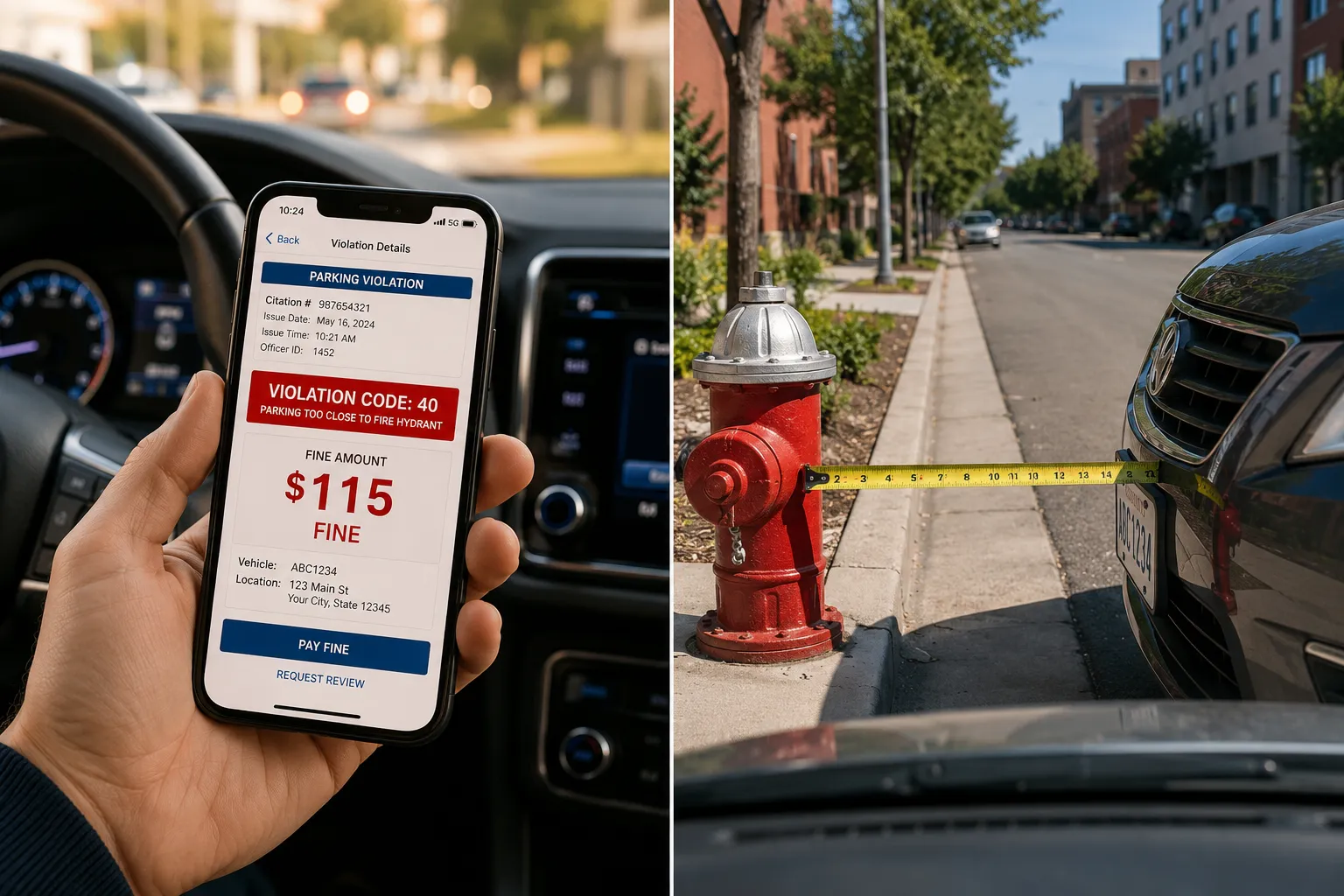
    • Tape measure (most accurate): Carry a small measuring tape or use a smartphone app to confirm 15 feet (180 inches or 4.6 meters) before committing to a spot.[8][7]

    Both sides matter equally. The 15-foot buffer extends in both directions along the curb. Drivers often assume the space immediately after a hydrant (in the direction of traffic) is safer or less enforced, it is not.[3][10] Enforcement applies symmetrically on both the approach and departure sides.[10][13]

    When evaluating a curb space, also check for other distance restrictions that commonly overlap with hydrant zones:

    • 20 feet from crosswalk areas (measured from the nearest edge of the crosswalk)
    • 30 feet from stop signs or traffic signals on the approach side[11]

    If a potential parking spot is near a hydrant and also close to a crosswalk or stop sign, you must satisfy all applicable distance rules simultaneously.[11]
    How to Measure 15 Feet Accurately on NYC Streets

    Fire Hydrant Parking Violations: Fines, Enforcement, and Real-Time Status

    Parking within 15 feet of a fire hydrant is classified as NYC parking violation code 40.[9][6] As of 2026, the standard fine for this violation is approximately $115.[9][12] Hydrant tickets are among the most common and rigorously enforced parking infractions citywide, with traffic enforcement agents and NYPD officers issuing them frequently.[9][12][6]

    Why enforcement is strict: Firefighters require unobstructed access and clearance to connect hoses and operate equipment during emergencies. Even partial obstruction, such as parking close enough that hoses must be routed awkwardly, can delay response times, which is why the city maintains low tolerance for any vehicle in the hydrant zone.[3][14][6]

    Check Real-Time Status and Suspension Calendars: While the 15-foot hydrant rule itself does not suspend for holidays or street cleaning, Alternate Side Parking regulations do. If you’re navigating complex parking rules in neighborhoods like Park Slope, Astoria, Williamsburg, DUMBO, or Greenpoint, use real-time suspension calendars to confirm whether Alternate Side Parking is in effect today. This helps you avoid layering a hydrant violation on top of an ASP ticket.

    Unfair parking citations and disputes: If you believe you received a hydrant ticket in error, for example, if you have photographic evidence showing your vehicle was more than 15 feet away, consult resources on Tickets & Disputes for step-by-step guidance on contesting the citation. Document the scene with photos showing the hydrant, your vehicle position, and measurements before moving your car.

    Towing & Impounds: Vehicles parked illegally at hydrants are subject to towing, especially in high-traffic or emergency-response corridors. If your car has been towed, visit Towing & Impounds resources immediately to locate your vehicle and understand recovery procedures.

    Off-Street Parking Alternatives Across NYC Boroughs

    When street parking near fire hydrants or in congested neighborhoods becomes too risky or time-consuming, off-street parking garages and lots offer predictable, legal alternatives. Explore the NYC Parking Directory to find facilities across all five boroughs, compare rates, and secure spots in advance.

    Borough-specific garage options:

    Parking Education Hub: For comprehensive guides on garage savings, rate comparisons, and strategies to reduce parking costs, visit the Parking Garages & Savings section of the Parking Education Hub.

    Conclusion

    Understanding how close to a fire hydrant can you park NYC is straightforward: 15 feet minimum, measured from the hydrant to your vehicle’s nearest point, on both sides, at all times. Do not rely on curb paint, do not assume the daylight exception applies if you leave the vehicle, and do not risk a $115 fine by guessing distances.

    Actionable next steps:

    • Measure accurately: Use walking paces (five to six strides) or a car-length estimate (one to one-and-a-half lengths) before committing to a curb spot.
    • Check Real-Time Status: Confirm Alternate Side Parking suspensions and street cleaning schedules in your neighborhood to layer compliance across all parking rules.
    • Explore Off-Street Options: When street parking is too uncertain, locate and compare garages via the NYC Parking Directory.
    • Fight Unfair Citations: If you receive an incorrect hydrant ticket, document the scene and consult Tickets & Disputes resources immediately.
    • Stay Informed: Bookmark suspension calendars and real-time alerts to avoid fines and towing across all NYC boroughs.

    Avoid fines and towing by treating the 15-foot hydrant rule as non-negotiable. Locate your vehicle with confidence, check status in real time, and use the Parking Education Hub to navigate NYC’s complex parking landscape successfully in 2026.

    References

    [1] Article – https://portal.311.nyc.gov/article/?kanumber=KA-01026 [2] Parking Regulations – https://www.nyc.gov/html/dot/html/motorist/parking-regulations.shtml [3] Nyc Fire Hydrant Parking Distance – https://www.spotlink.app/nyc-fire-hydrant-parking-distance [5] 0 0 0 63770 – https://codelibrary.amlegal.com/codes/newyorkcity/latest/NYCrules/0-0-0-63770 [6] No Nonsense Guide To Nyc Fire Hydrant Rule – https://newyorkparkingticket.com/no-nonsense-guide-to-nyc-fire-hydrant-rule/ [7] In New York City How Far From A Fire Hydrant Can You Legally Park A Hire Car – https://holacarrentals.com/blogs/car-rental-united-states/in-new-york-city-how-far-from-a-fire-hydrant-can-you-legally-park-a-hire-car [8] How Close Can You Legally Park To A Fire Hydrant In New York And How Do You Measure It Quickly – https://holacarrentals.com/blogs/car-rental-united-states/how-close-can-you-legally-park-to-a-fire-hydrant-in-new-york-and-how-do-you-measure-it-quickly [9] Hydrant Parking Nyc – https://www.spotlink.app/hydrant-parking-nyc [10] Can You Park Near Fire Hydrant Nyc – https://www.spotlink.app/blog/can-you-park-near-fire-hydrant-nyc [12] No Nonsense Guide To Nyc Fire Hydrant Rule – https://newyorkparkingticket.com/no-nonsense-guide-to-nyc-fire-hydrant-rule/ [13] Can You Park Near Fire Hydrant Nyc – https://www.spotlink.app/blog/can-you-park-near-fire-hydrant-nyc [14] Nyc Fire Hydrant Parking Distance – https://www.spotlink.app/nyc-fire-hydrant-parking-distance
  • The Complete Guide to Alternate Side Parking Rules NYC in 2026

    The Complete Guide to Alternate Side Parking Rules NYC in 2026

    New York City issues over 2 million alternate side parking tickets annually, generating more than $100 million in revenue. Every weekday morning, thousands of drivers scramble to move their vehicles before street sweepers arrive, or face costly citations and the nightmare of towing. Understanding alternate side parking rules NYC is not optional for city residents; it’s essential survival knowledge that protects your wallet and your time.

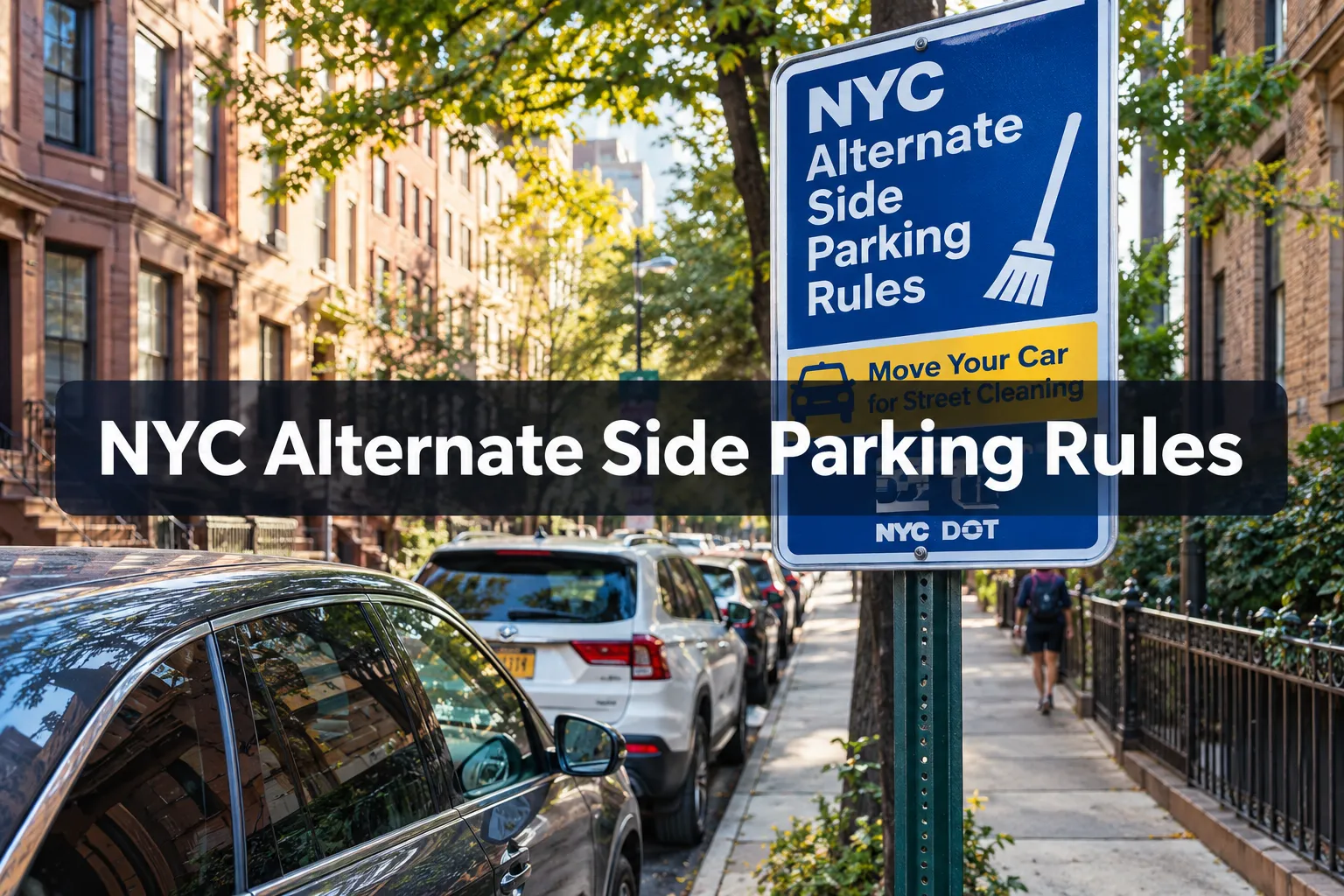
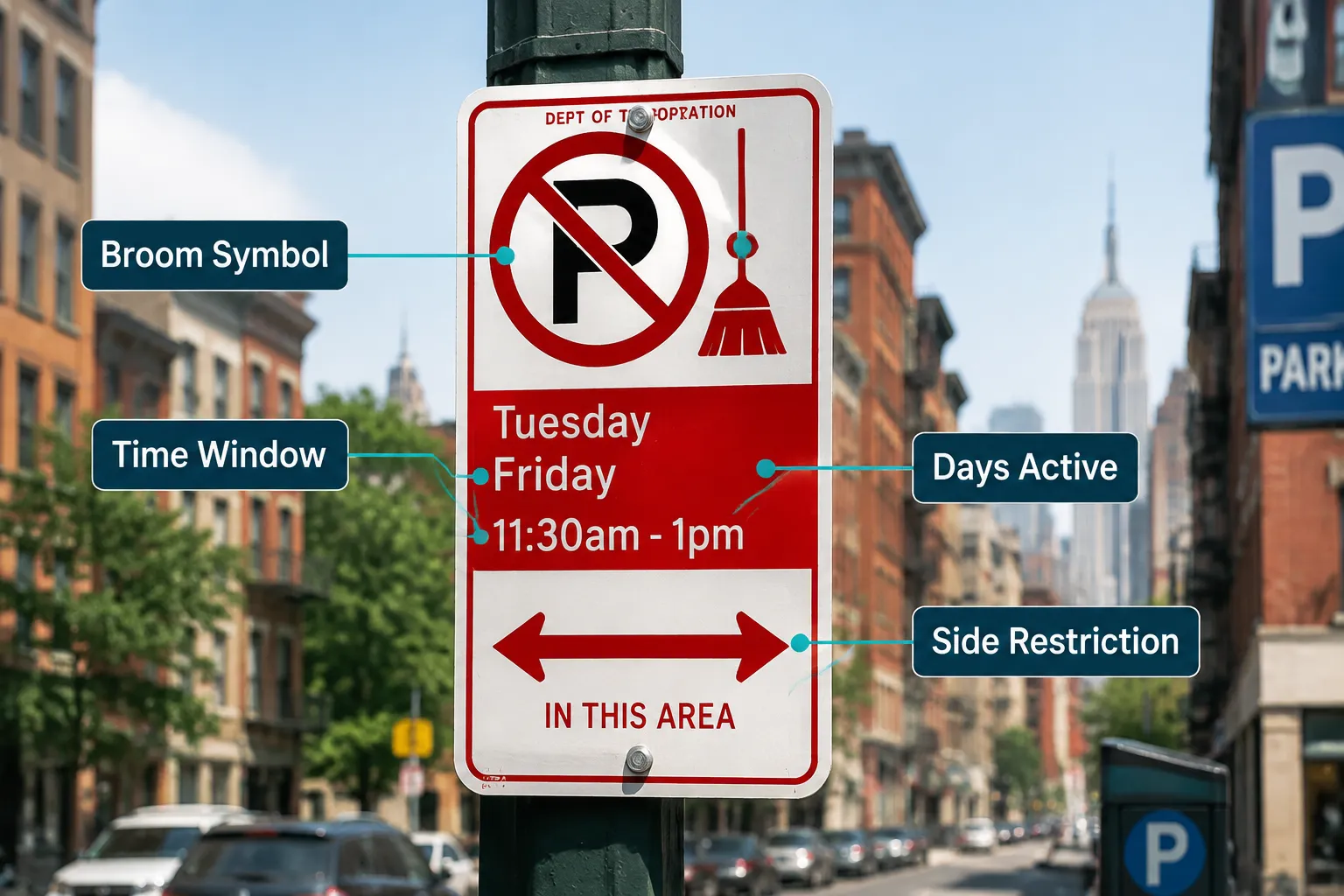
    Alternate side parking rules NYC exist for one purpose: to allow Department of Sanitation crews to clean city streets effectively. When ASP is in effect, you cannot park on the designated side during posted hours, even if the sweeper has already passed[8]. The regulations apply across all five boroughs, with specific schedules posted on street signs featuring the distinctive «P» with broom symbol. Violations carry steep fines, and repeat offenders risk towing and impounds.

    This guide provides real-time information on how alternate side parking rules NYC operate in 2026, including suspension calendars, grace periods, enforcement changes, and neighborhood-specific details. Check status daily to avoid fines and towing.

    Key Takeaways

    • ASP regulations require vehicles to move during posted hours for street cleaning, even after sweepers pass; violations result in tickets and potential towing
    • A 5-minute grace period applies citywide in 2026, giving drivers extra time past posted restrictions before citations can be issued
    • ASP suspensions occur on major legal and religious holidays, with the official 2026 calendar listing all scheduled dates; emergency suspensions happen for snow and severe weather
    • Parking meters remain in effect during most ASP suspensions, except on specific holidays like Independence Day and Sundays when meters are also suspended
    • New legislation passed in July 2026 restores DSNY authority to place large warning stickers on vehicles that ignore ASP rules

    Understanding Alternate Side Parking Rules NYC Basics

    Understanding Alternate Side Parking Rules NYC Basics

    Alternate side parking exists to facilitate street cleaning operations across New York City. The Department of Sanitation schedules regular sweeping routes, and ASP regulations force vehicles to relocate temporarily so crews can access curbs and gutters effectively[8].

    How to Read ASP Signs

    Official ASP signs display a «P» symbol with a broom icon. Each sign posts specific information:

    • Days of the week when restrictions apply
    • Time windows during which parking is prohibited
    • Which side of the street is affected

    The restriction applies for the entire posted period, regardless of whether the street sweeper has already passed your block[8]. Do not assume you can return early.

    The 5-Minute Grace Period Rule

    As of 2026, New York City enforces a mandatory 5-minute grace period for all alternate side parking zones[8]. This means:

    • Parking tickets cannot legally be issued until five minutes after the posted start time
    • Drivers have extra time to move vehicles without penalty
    • The grace period applies citywide and is codified in official 311 guidance

    Locate your vehicle and move it before the grace period expires. Traffic enforcement agents begin ticketing immediately after the window closes.

    When ASP Does Not Apply

    Alternate side parking rules NYC are not in effect on Sundays[8]. Additionally, drivers do not need to pay parking meters on Sundays citywide.

    ASP regulations are suspended on specific legal and religious holidays throughout the year, as well as during emergency declarations for snow operations or severe weather[1][5]. The official suspension calendar lists all scheduled dates, but always verify real-time status before assuming ASP is off.

    Official 2026 Alternate Side Parking Rules NYC Suspension Calendar

    Official 2026 Alternate Side Parking Rules NYC Suspension Calendar

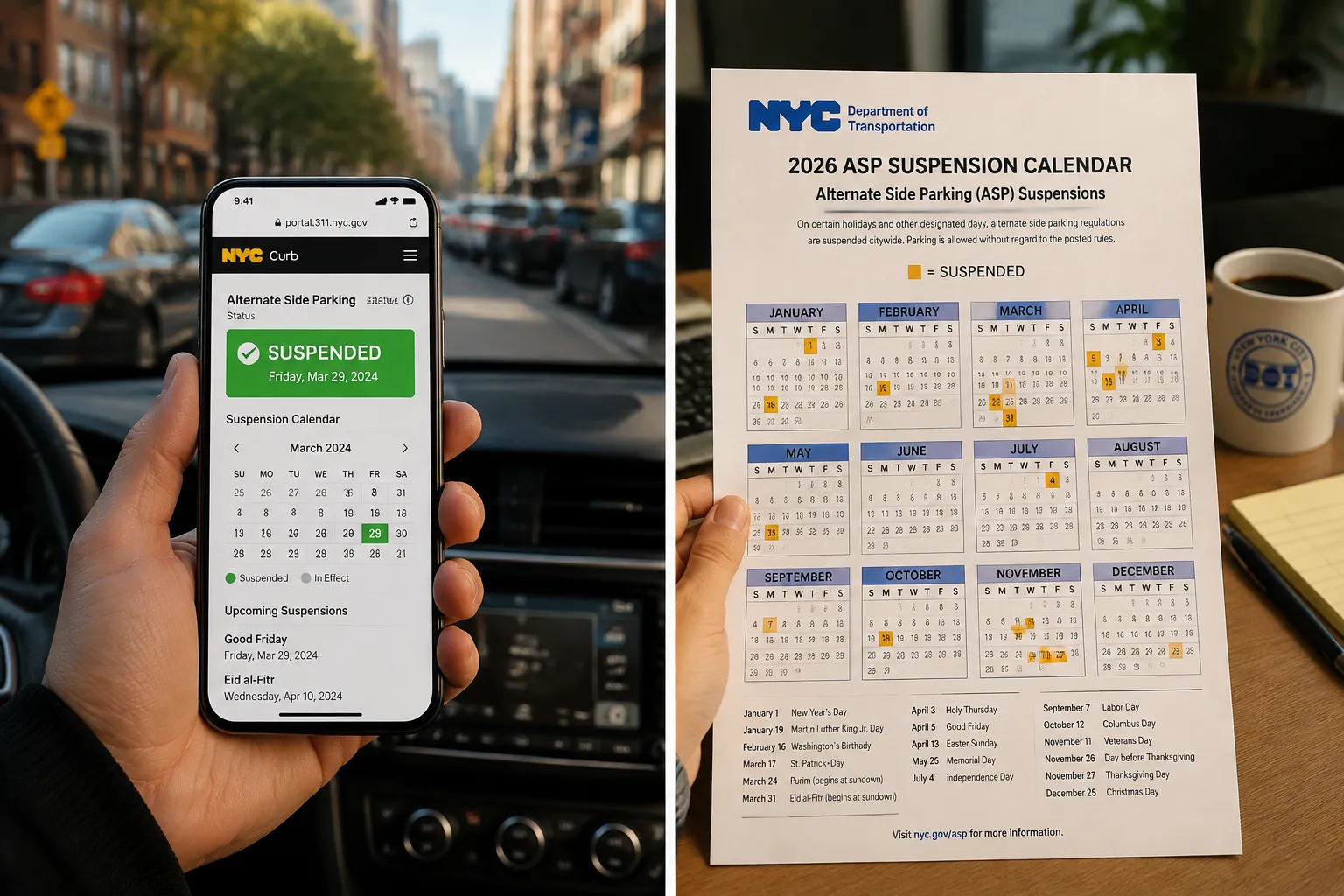
    The New York City Department of Transportation publishes an annual suspension calendar that lists every scheduled date when alternate side parking rules NYC will not be enforced[1]. For 2026, the calendar was updated in late August and includes a comprehensive list of legal and religious holidays recognized by the city[1].

    Major Scheduled Suspensions in 2026

    ASP regulations are suspended on the following confirmed dates in 2026[8]:

    Date Holiday/Observance
    January 1 New Year’s Day
    January 6 Three Kings’ Day
    January 19 Martin Luther King Jr. Day
    February 12 Lincoln’s Birthday
    February 16 Washington’s Birthday/Presidents’ Day
    February 16-18 Lunar New Year observances
    February 18 Ash Wednesday, Losar
    March 3 Purim
    May 25 Memorial Day

    The full calendar extends through December and covers dozens of religious observances, including Christian, Jewish, Muslim, Hindu, and Buddhist holidays[5][8]. This reflects the city’s commitment to accommodating its diverse population.

    Emergency Weather Suspensions

    Beyond scheduled holidays, the city frequently suspends alternate side parking rules NYC for snow operations and severe weather[1]. In early 2026, DOT issued multiple emergency suspensions:

    • Through February 8: Extended suspension for ongoing snow removal[14]
    • February 11-12: Snow operations plus Lincoln’s Birthday[7]
    • Through February 14: Continued snow emergency[3]
    • March 2-3: Snow operations coinciding with Purim[6]

    These emergency suspensions are announced via official DOT press releases, social media, and the city’s 311 system. Real-time status updates are critical during winter months.

    How to Check Real-Time Status

    Suspension calendars provide scheduled dates, but emergency changes happen with little notice. Verify current status daily using these official channels:

    • Visit nyc.gov for DOT announcements
    • Call 311 for real-time confirmation
    • Use real-time ASP status tools for instant updates
    • Follow NYC DOT on social media for immediate alerts

    Never rely solely on the printed calendar. Weather emergencies and special events can trigger unscheduled suspensions at any time[1].

    Parking Meters During Suspensions

    Critical distinction: When alternate side parking rules NYC are suspended, parking meters typically remain in effect citywide[2][3][6][7]. You do not need to move your car for street cleaning, but you must still pay the meter.

    Exceptions exist for major federal holidays. On Independence Day 2026 (July 3-4), both ASP regulations and parking meters were suspended citywide[13]. Sundays are another exception: ASP never applies, and meters are free[8].

    Always confirm meter status on suspension days to avoid citations.

    Alternate Side Parking Rules NYC Across New York State

    While this guide focuses on New York City, alternate side parking regulations exist in municipalities across New York State. Each city maintains its own schedule, suspension calendar, and enforcement policies.

    Other New York Cities with ASP

    Drivers in these cities face similar street-cleaning regulations:

    Each municipality posts its own signs and maintains separate suspension calendars. Do not assume NYC rules apply elsewhere.

    Neighborhood-Specific NYC Rules

    Within New York City, certain neighborhoods experience higher ASP enforcement due to population density and limited off-street parking:

    Always read the specific sign on your block. Times and days vary by street.

    New Enforcement Changes: The Return of ASP Stickers in 2026

    In July 2026, the New York City Council passed Intro 92, restoring the Department of Sanitation’s authority to place large warning stickers on vehicles that fail to move during alternate side parking hours[10][11][12]. The measure passed by a 41-10 vote and reverses a ban that had been in place since approximately 2011-2012[10].

    How the Sticker Program Works

    Under the new legislation:

    • DSNY can affix stickers up to 8.5 by 11 inches on vehicle windows[10][11]
    • Stickers serve as high-visibility warnings to drivers who routinely ignore ASP rules
    • The program aims to improve compliance and street cleanliness, not increase fines[9]
    • Stickers complement traditional ticketing rather than replace it

    Council Member Gale Brewer’s office emphasizes that the goal is simply to get motorists to move their cars so sanitation crews can properly clean streets[9]. The visible stickers are intended to «shame» or strongly warn repeat violators[10][11].

    Implementation Timeline

    The bill was sent to Mayor Zohran Mamdani’s desk for consideration in early July 2026[4][9][12]. Full implementation depends on mayoral approval and subsequent agency rulemaking. Once active, drivers who ignore alternate side parking rules NYC may find large, difficult-to-remove stickers on their windshields in addition to traditional citations.

    Sanitation officials quoted in news coverage expect the program to improve compliance rates over time by creating a stronger deterrent than tickets alone[10].

    How to Avoid Alternate Side Parking Fines and Towing

    Alternate side parking violations carry financial penalties and the risk of vehicle impounds. Follow these strategies to protect yourself:

    Daily Status Checks

    Make checking ASP status part of your morning routine:

    • Use real-time status trackers for instant confirmation
    • Set calendar reminders for your street’s ASP days
    • Subscribe to city alerts for emergency suspensions
    • Check before bed if your ASP window starts early morning

    Understand the Full Time Window

    The posted time restriction applies for the entire period, even if the street sweeper has already passed[8]. Do not return your vehicle early. Wait until the posted end time plus the 5-minute grace period has fully elapsed.

    Know Your Suspension Calendar

    Download and print the official 2026 ASP suspension calendar[1]. Mark all scheduled holidays in your personal calendar. Remember that emergency weather suspensions can happen at any time, always verify real-time status.

    Explore Off-Street Parking Options

    When ASP enforcement is strict or you need guaranteed parking:

    Off-street parking eliminates ASP stress entirely and can be cost-effective for frequent violators.

    Fight Unfair Parking Citations

    If you receive an unjust ticket:

    • Document the scene with time-stamped photos
    • Review the posted sign carefully for discrepancies
    • Check whether ASP was officially suspended that day
    • File a dispute through NYC’s Parking Education Hub resources
    • Understand your rights regarding the 5-minute grace period[8]

    Many unfair parking citations can be successfully contested with proper documentation.

    Conclusion

    Alternate side parking rules NYC are non-negotiable for anyone who parks on city streets. The regulations exist to facilitate essential street cleaning operations, and violations result in costly tickets, potential towing, and now, as of 2026, large warning stickers on your windshield. Understanding the posted signs, the 5-minute grace period, and the official suspension calendar protects you from hundreds of dollars in annual fines.

    Take these actions immediately:

    • Check real-time ASP status before every parking decision
    • Download the official 2026 suspension calendar and mark all scheduled holidays
    • Set daily reminders for your street’s ASP days
    • Explore off-street parking options in your neighborhood for stress-free alternatives
    • Verify meter requirements on suspension days, meters usually remain in effect

    Stay informed. Verify status daily. Avoid fines and towing by treating alternate side parking rules NYC as the serious municipal requirement they are. Your wallet will thank you.

    References

    [1] Asp Calendar 2026 – https://www.nyc.gov/html/dot/downloads/pdf/asp-calendar-2026.pdf

    [2] Suspension Of Alternate Side Parking Regulations Feb 23 26 – https://www.nyc.gov/html/dot/html/pr2026/suspension-of-alternate-side-parking-regulations-feb-23-26.shtml

    [3] Suspension Of Alternate Side Parking Regulations Feb 12 26 – https://www.nyc.gov/html/dot/html/pr2026/suspension-of-alternate-side-parking-regulations-feb-12-26.shtml

    [4] Council Approves Bill To Sticker Alternate Side Parking Violators – https://ny1.com/nyc/all-boroughs/mornings-on-1/2026/07/08/council-approves-bill-to-sticker-alternate-side-parking-violators

    [5] Alternate Side Parking – https://www.nyc.gov/html/dot/html/motorist/alternate-side-parking.shtml

    [6] Suspension Of Alternate Side Parking Regulations Mar 01 26 – https://www.nyc.gov/html/dot/html/pr2026/suspension-of-alternate-side-parking-regulations-mar-01-26.shtml

    [7] Suspension Of Alternate Side Parking Regulations Feb 11 26 – https://www.nyc.gov/html/dot/html/pr2026/suspension-of-alternate-side-parking-regulations-feb-11-26.shtml

    [8] Article – https://portal.311.nyc.gov/article/?kanumber=KA-01011

    [9] Ignore Alternate Side Parking – https://council.nyc.gov/gale-brewer/2026/07/02/ignore-alternate-side-parking/

    [10] abc7ny – https://abc7ny.com/post/new-york-city-drivers-ignore-alternate-side-parking-rules-could-soon-get-sticker-courtesy-dsny/19425126/

  • What Does No Standing Mean in NYC?

    What Does No Standing Mean in NYC?

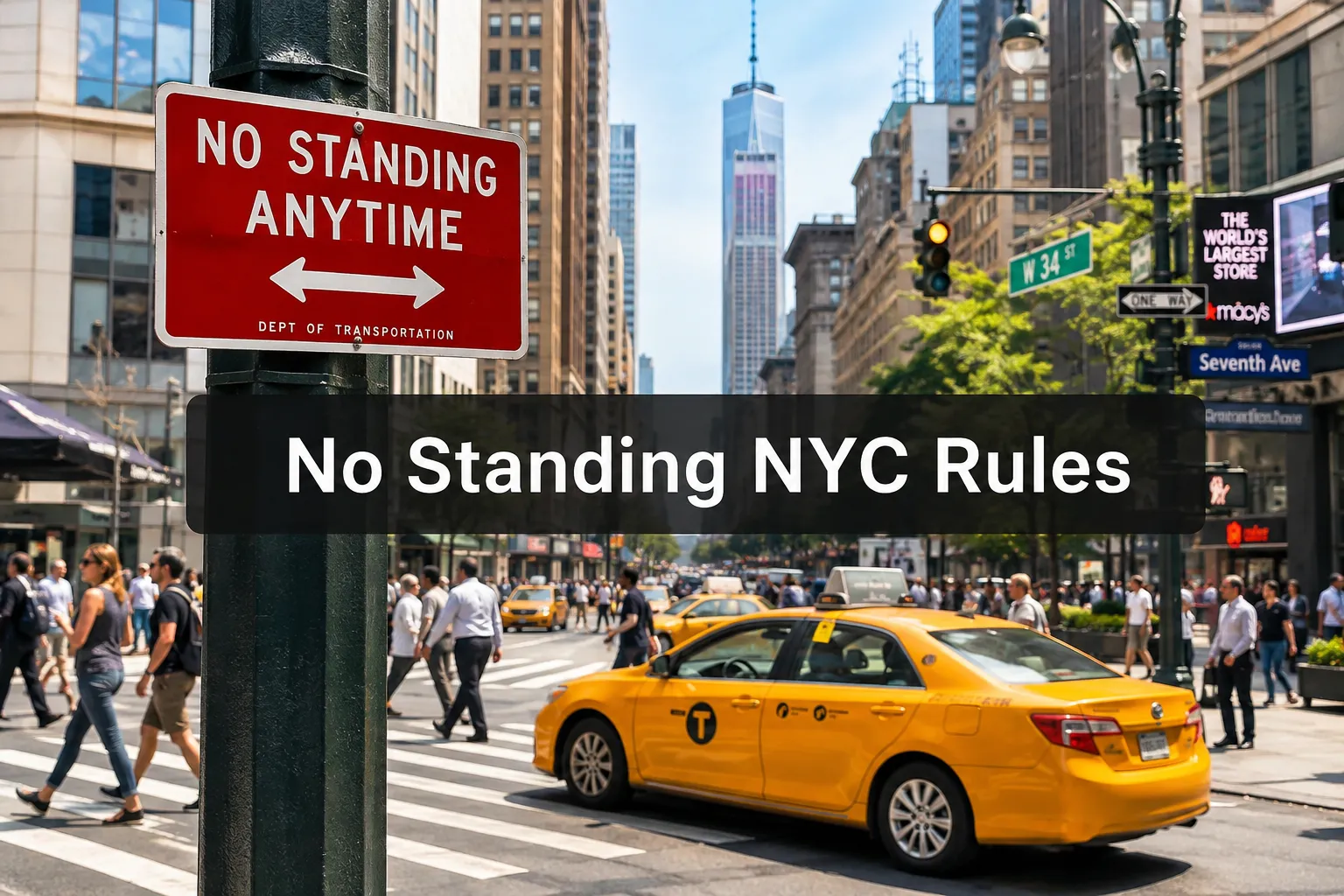
    New York City issues more than 10 million parking tickets every year, and a huge chunk of them come from drivers who thought they understood the rules. The phrase «No Standing» appears on thousands of street signs across all five boroughs, yet most drivers cannot explain what it actually means or how it differs from «No Parking.» Understanding what «No Standing» means in NYC is critical for anyone who drives, delivers goods, or hails a ride in the city.

    Key Takeaways

    • No Standing means you can stop only long enough to pick up or drop off passengers who are already waiting at the curb.
    • You cannot wait in your car, even with the engine running, in a No Standing zone.
    • No Standing is stricter than No Parking but less strict than No Stopping.
    • Violations carry fines starting at $115 in most Manhattan zones as of 2026.
    • Commercial drivers and ride-share operators face the highest risk of tickets in No Standing zones.

    What Does No Standing Mean in NYC? The Official Definition

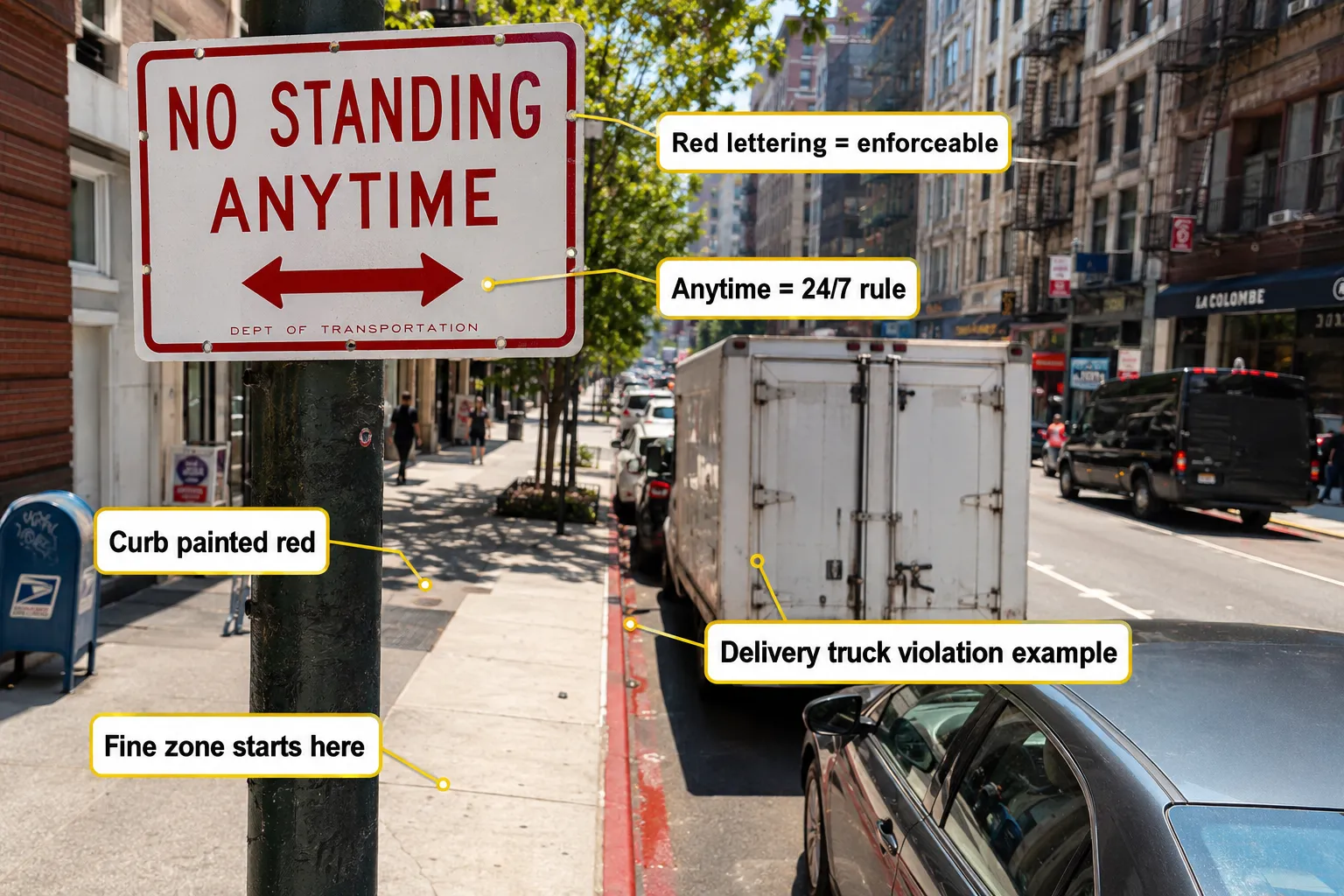
    The New York City Department of Transportation defines «standing» as stopping your vehicle and waiting, whether or not you leave the car [2]. In a No Standing zone, you may stop only to pick up or drop off a passenger who is immediately ready to enter or exit your vehicle [6]. The moment you wait for someone to arrive, load luggage, or finish a phone call, you are violating the rule.

    This definition comes directly from NYC traffic regulations and applies 24 hours a day unless the sign specifies certain hours [7]. Many drivers assume that keeping the engine running or staying in the driver’s seat makes waiting legal. It does not. Waiting counts as standing, and standing is prohibited [10].

    What Does No Standing Mean in NYC? The Official Definition

    How No Standing Differs from No Parking and No Stopping

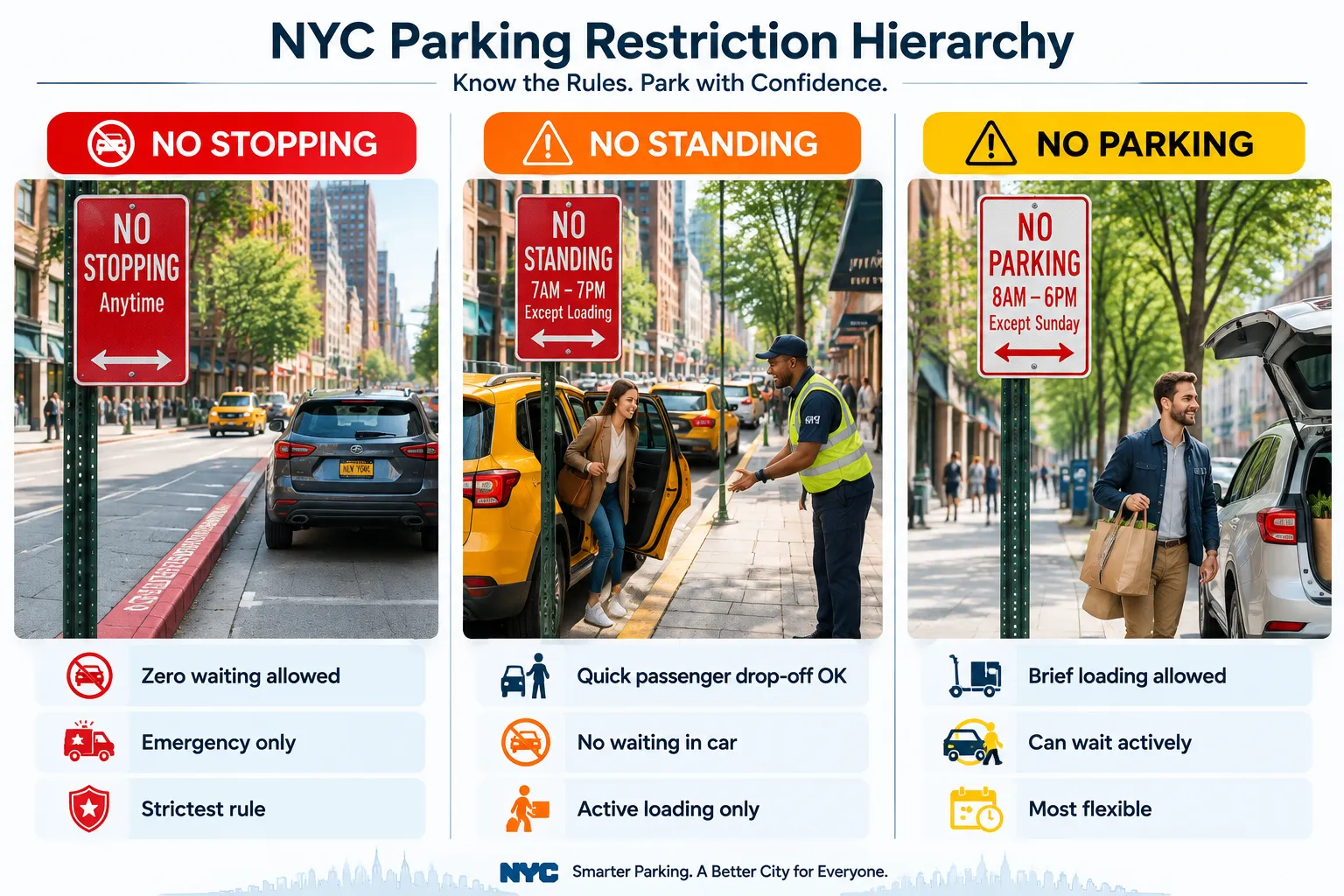
    New York uses three similar terms that confuse nearly everyone: No Stopping, No Standing, and No Parking. Each has a specific legal meaning, and the differences matter when an enforcement agent writes a ticket [3].

    No Stopping is the strictest rule. You cannot stop your vehicle for any reason except to avoid a crash or obey a traffic signal [6]. Even a quick passenger drop-off is illegal in a No Stopping zone.

    No Standing is the middle tier. You may stop briefly to pick up or drop off passengers, but you cannot wait in the vehicle [8]. Loading or unloading cargo is not allowed unless a separate sign permits commercial loading.

    No Parking is the most flexible. You can stop to actively load or unload passengers or cargo, and you can wait in the car while doing so [9]. You just cannot leave the vehicle unattended or park for an extended period.

    The hierarchy is simple: No Stopping is stricter than No Standing, and No Standing is stricter than No Parking [3]. Knowing this order helps you make quick decisions when you see a sign.

    Common Scenarios: What You Can and Cannot Do

    Real-world situations reveal how the rule works in practice. If you drive for a ride-hail service and stop in a No Standing zone to wait for a passenger who texted «be right down,» you are violating the rule [4]. The law requires the passenger to be at the curb before you stop.

    Delivery drivers often ask whether they can stop in a No Standing zone to unload packages. The answer is no, unless a separate sign explicitly permits commercial loading during certain hours [5]. Many No Standing zones in Manhattan prohibit all standing except during narrow time windows for deliveries.

    Parents picking up children from school frequently receive tickets in No Standing zones because they arrive early and wait [10]. The correct approach is to circle the block or find legal parking until the child is visible and ready to enter the car.

    Taxi and for-hire vehicle operators face strict enforcement in No Standing zones near airports, hotels, and transit hubs [6]. These high-traffic areas use No Standing rules to keep vehicles moving and prevent congestion.

    Where No Standing Zones Are Most Common in NYC

    No Standing signs appear throughout New York City, but certain locations have heavy concentrations. Midtown Manhattan, especially near Penn Station and Grand Central Terminal, has extensive No Standing zones to manage commuter and tourist traffic [2].

    Major commercial corridors in Brooklyn, Queens, and the Bronx also feature No Standing restrictions during business hours to facilitate deliveries and prevent double-parking [5]. If you’re searching for parking in Manhattan or parking in Queens, you’ll notice that legal street parking often requires understanding these signs.

    Bus stops, fire hydrants, and crosswalks almost always have No Standing rules, even if no sign is posted [7]. In some cases, the curb is painted red or yellow to reinforce the restriction.

    Neighborhoods with alternate side parking rules often combine No Standing restrictions with street-cleaning schedules. Drivers in areas like Greenpoint or Park Slope must check both the No Standing hours and the alternate side parking calendar to avoid tickets.

    Where No Standing Zones Are Most Common in NYC

    Fines, Enforcement, and How to Avoid Tickets

    As of January 2026, a No Standing violation in Manhattan’s Midtown core costs $115 [7]. In other parts of the city, the fine is typically $95. If your violation blocks a bike lane, bus stop, or crosswalk, the fine can exceed $150.

    Enforcement is aggressive in high-traffic zones. Traffic agents, NYPD officers, and automated camera systems all issue No Standing tickets [5]. Camera enforcement has expanded significantly in 2026, especially near bus lanes and school zones.

    To avoid tickets, follow these steps:

    • Read every sign carefully before you stop. Look for time restrictions and day-of-week rules.
    • Never wait in a No Standing zone, even for «just a minute.»
    • Use legal parking facilities when you need to wait. Check resources like parking in the Bronx or parking in Brooklyn to find nearby garages.
    • If you receive a ticket you believe is unfair, you can dispute it through the city’s online portal. Learn more in our guide to parking ticket disputes.

    Commercial drivers should plan routes that include legal loading zones. Many delivery companies now use apps that show real-time loading zone availability and alternate side parking status to minimize violations.

    Using Tools and Resources to Stay Compliant

    Staying on top of NYC parking rules requires access to current information. The city suspends alternate side parking on holidays, which can affect No Standing enforcement in some zones. Tools that provide live alternate side parking status help drivers know when rules are in effect.

    If your car is towed from a No Standing zone, act quickly. Our guide to finding your towed car in NYC walks you through the retrieval process and explains how to minimize storage fees.

    Mobile apps and online lookup tools now offer real-time alerts about parking rules, garage rates, and towing and impound information. Many drivers in cities like Buffalo and Albany use these tools to navigate complex local regulations.

    For frequent drivers, bookmarking a best parking apps guide can save time and money. These apps compare garage rates, show available spots, and send reminders about street-cleaning schedules.

    Conclusion

    Understanding what «No Standing» means in NYC is essential for every driver who navigates the city’s streets. The rule is simple in theory: you can stop only to pick up or drop off a passenger who is immediately ready, and you cannot wait. In practice, thousands of drivers receive tickets every week because they misunderstand or ignore this restriction.

    The key to compliance is reading signs carefully, never waiting in No Standing zones, and using legal parking or loading areas when you need more time. Fines are steep, enforcement is constant, and the rules apply around the clock unless a sign says otherwise.

    Take action today by reviewing the parking signs in the areas you drive most often. Use online tools to check alternate side parking schedules, find nearby garages, and set up alerts for rule changes. If you receive a ticket, explore your dispute options promptly. Staying informed and proactive will save you money, time, and frustration on New York City’s busy streets.

    References

    [1] Can Anyone Explain This Sign For Me – https://www.reddit.com/r/AskNYC/comments/2g9rg4/can_anyone_explain_this_sign_for_me/

    [2] Parking Regulations Sign Legend – https://www.nyc.gov/html/dot/downloads/pdf/parking-regulations-sign-legend.pdf

    [3] What Difference Between No Parking No Standing And No Stopping – https://nysltap.org/nysltap-local-roads/what-difference-between-no-parking-no-standing-and-no-stopping

    [4] 18d94d46610696f8d89d43f69d031d67 – https://www.oreateai.com/blog/decoding-nycs-parking-signs-no-standing-vs-no-parking-explained/18d94d46610696f8d89d43f69d031d67

    [5] Meaning No Standing – https://newyorkparkingticket.com/meaning-no-standing/

    [6] No Parking Vs No Standing Vs No Stopping Signs – https://www.newyorksafetycouncil.com/articles/no-parking-vs-no-standing-vs-no-stopping-signs/

    [7] 0 0 0 63770 – https://codelibrary.amlegal.com/codes/newyorkcity/latest/NYCrules/0-0-0-63770

    [8] No Parking Vs No Standing Vs No Stopping Signs 2 – https://blog.americansafetycouncil.com/no-parking-vs-no-standing-vs-no-stopping-signs-2/

    [9] What Is The Difference Between Stopping Standing Parking In Nyc – https://newyorkparkingticket.com/what-is-the-difference-between-stopping-standing-parking-in-nyc/

    [10] Nyc Parking Signs Decoded Alternate Side Parking No Standing No Stopping – https://www.vmaredriving.com/blog/nyc-parking-signs-decoded-alternate-side-parking-no-standing-no-stopping